On January 24th I started my six week intensive language program: four hours of individual instruction and two hours, one-on-one, with a conversation guide. The program also includes two excursions and a daily lunch that fed me through the next morning! The first three weeks I stayed with the same host family I had in 2019. The last three weeks I shared an apartment with my friend, Robin, from San Miguel de Allende. She came for her first experience learning Spanish.
The Institute
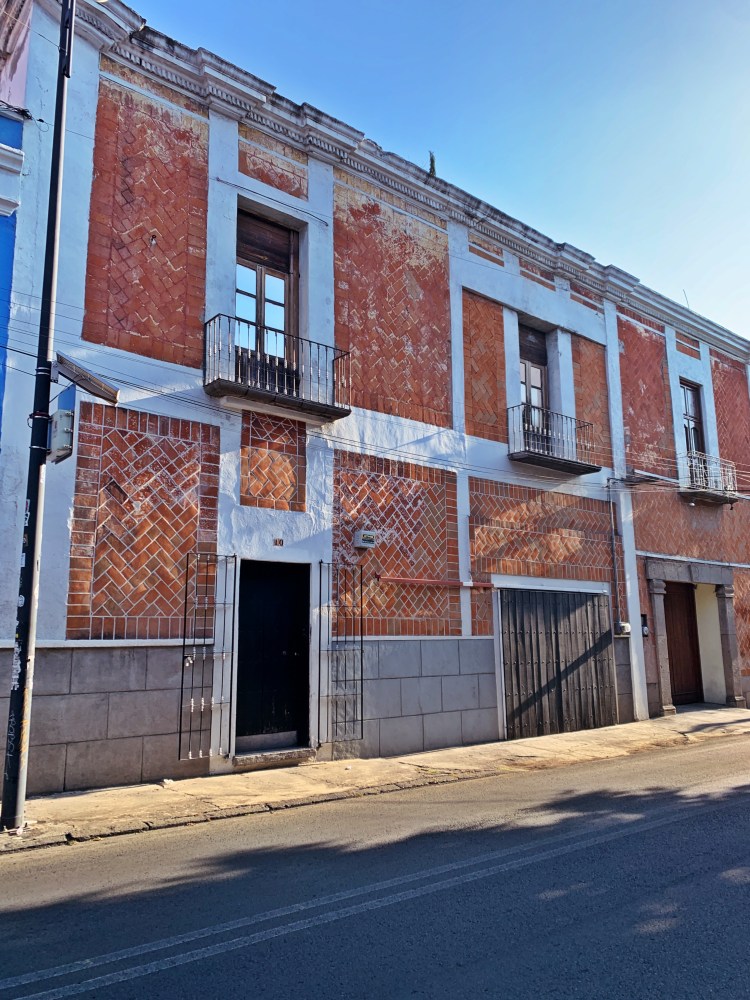
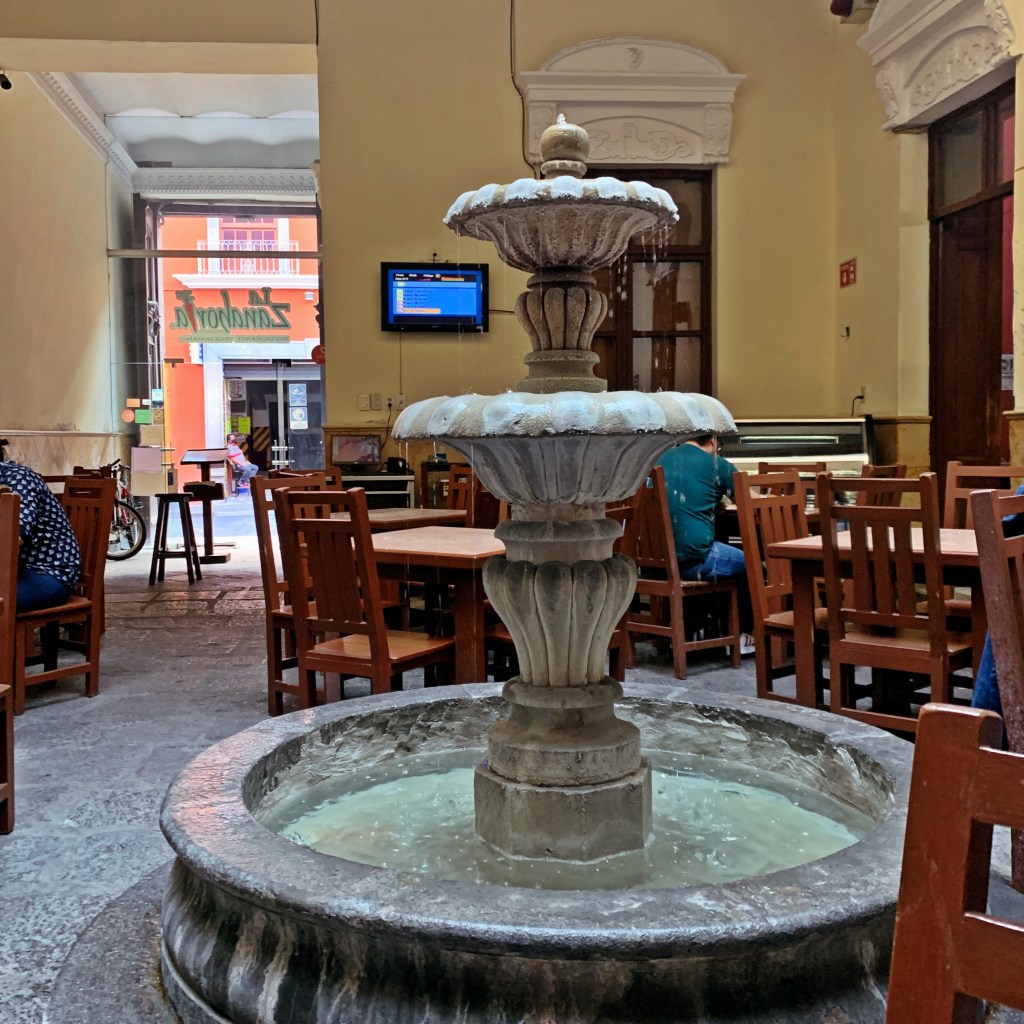
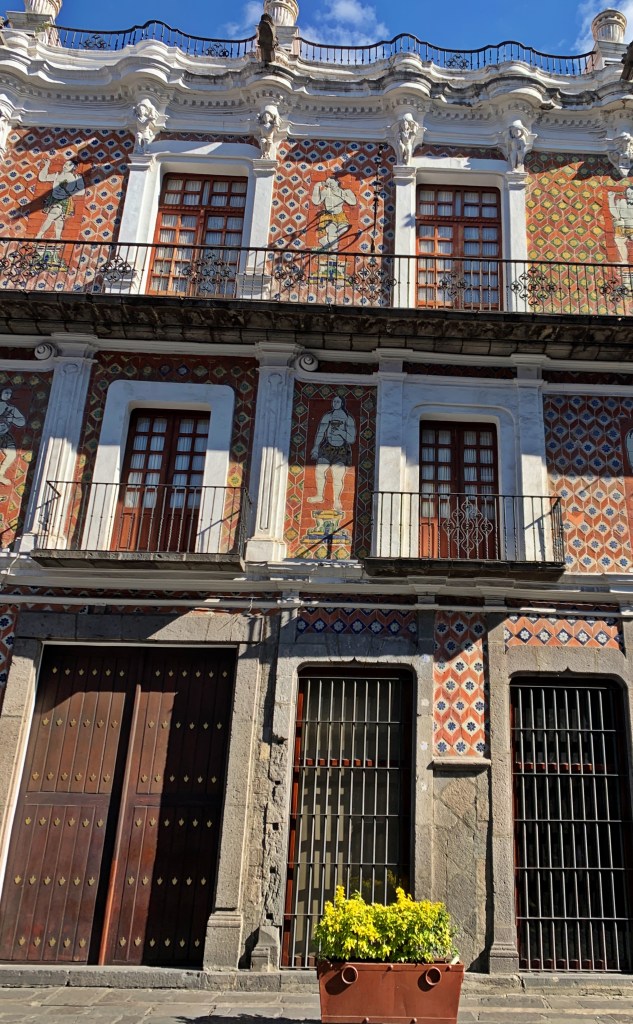
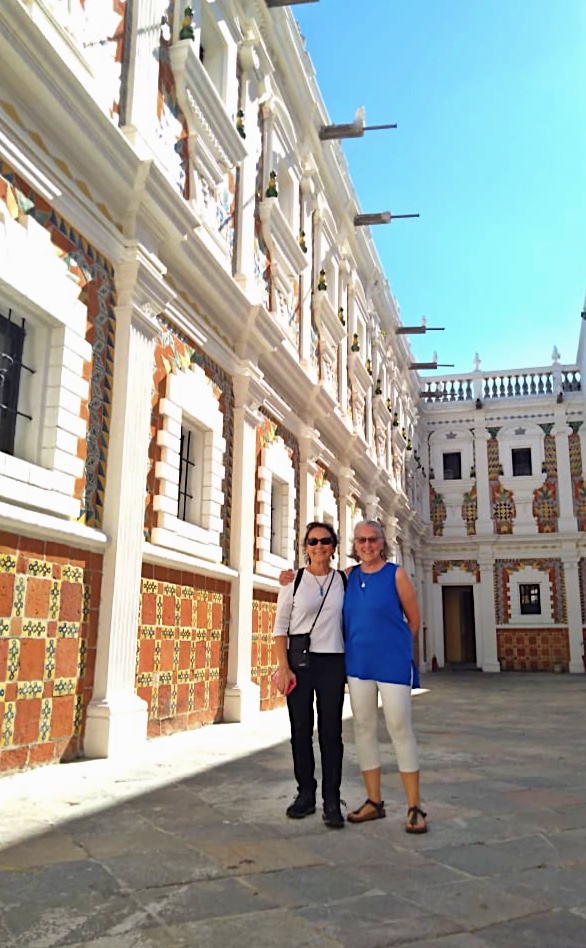
This unassuming building has housed the Institute for about 30 years. Before that it was an ex-convent. Because it is an historic building, street signage is not allowed, making it difficult to find. The door under the number #10 is the entrance. Each day I would arrive and press the security button to be let in. My temperature would be taken and I would be offered some antiseptic gel.
During my time at the Institute about 25 people were enrolled in about 15 difference classes. Some chose individual classes and received private instruction. A lot of students are studying for some type of missionary work in Spanish speaking countries. Others, from Europe, are studying to work in their country’s consulate offices in Mexico.
These classes were intense and I was exhausted at the end of each day, while still needing to complete homework. My teachers were extraordinary. They listened to my needs and quickly adapted their lessons. I was asked to articulate why I wanted to learn Spanish and my response focused the methods they used. All my teachers have degrees in Linguistics which allows them to teach from a whole systems approach, where we learn the roles of phrases and words. This approach reinvigorated my love of learning Spanish which was all but destroyed during my five quarters of university level Spanish. Laura, my first teacher, is gifted in how she explained and taught the difficult lessons of “the eight uses of ‘se'”, and the subjunctive mode – all four tenses! My second teacher, Evelyn, believes in teaching Spanish using personal experiences and perspectives in our lessons – it was powerful for me. As she discovered I enjoyed Mexican history, literature, cooking and indigenous cultures, she embellished her lessons accordingly.
My Host Family – Sofia Ibarra
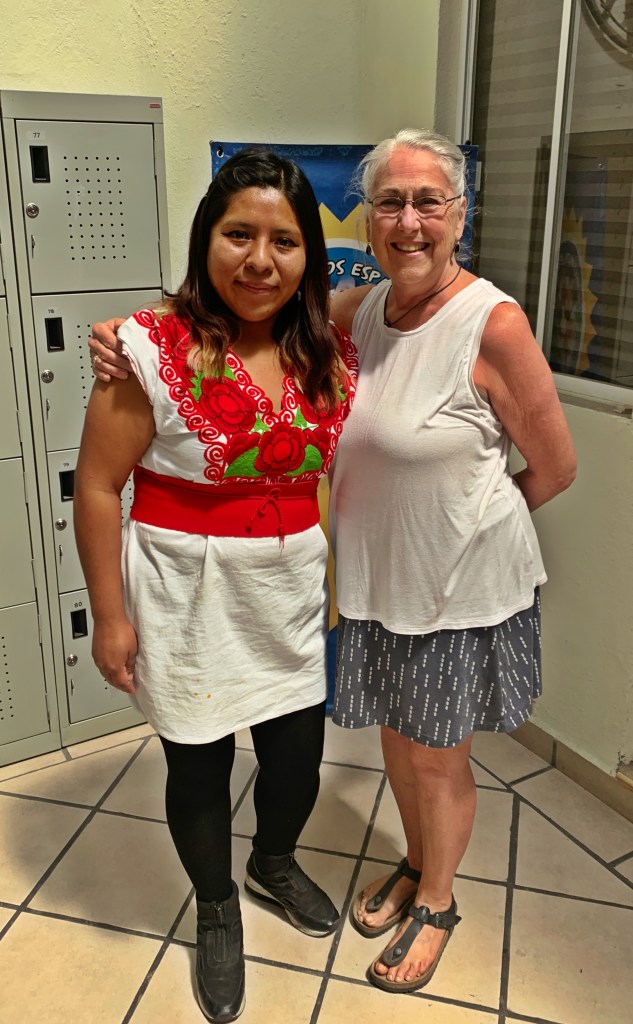
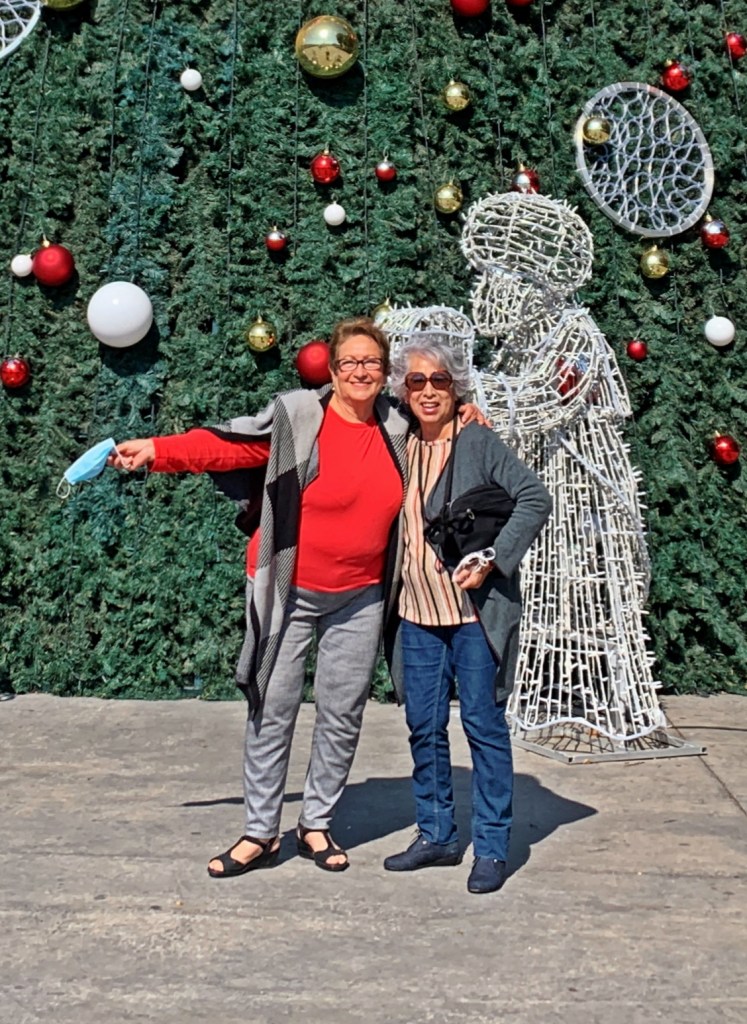
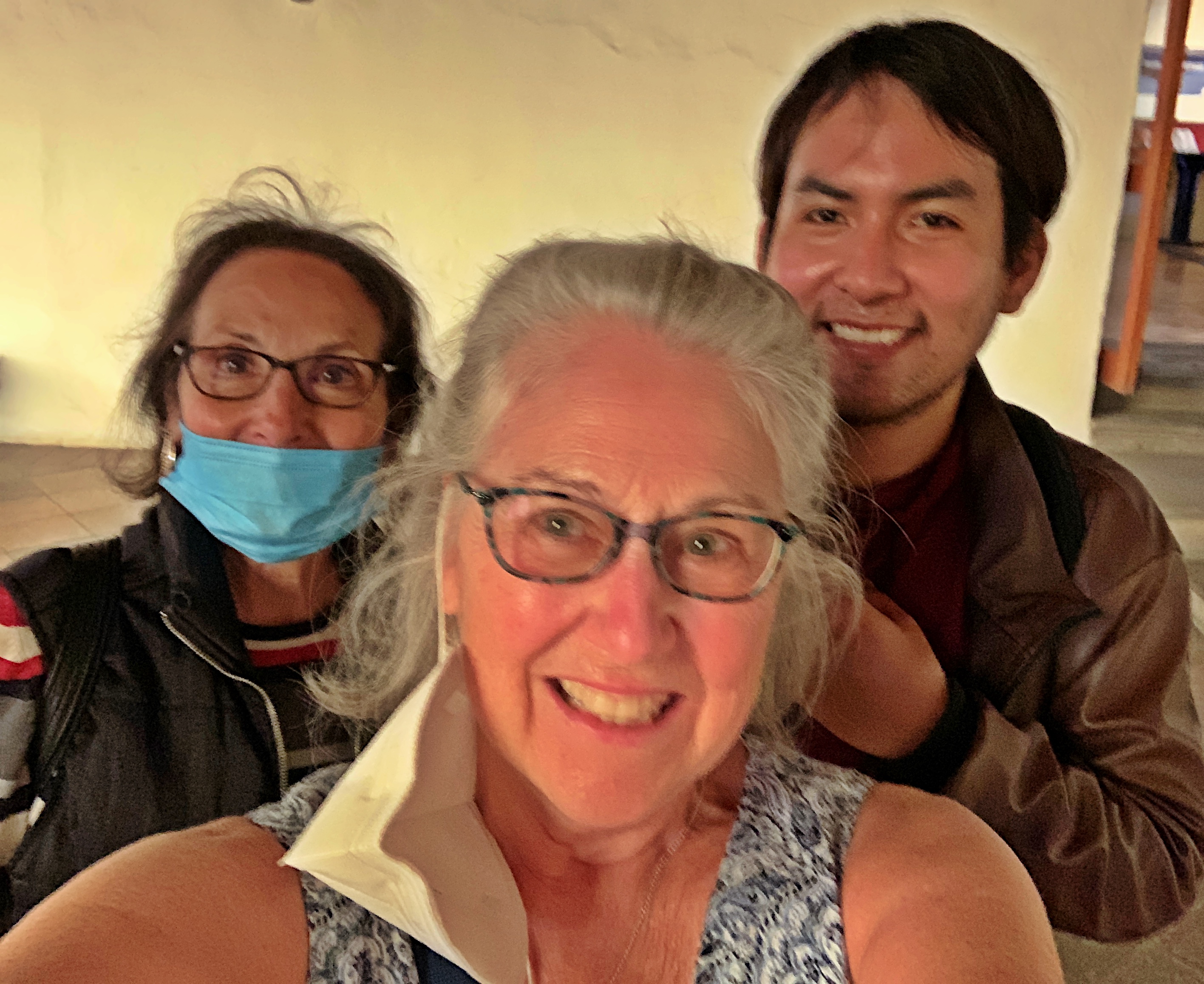
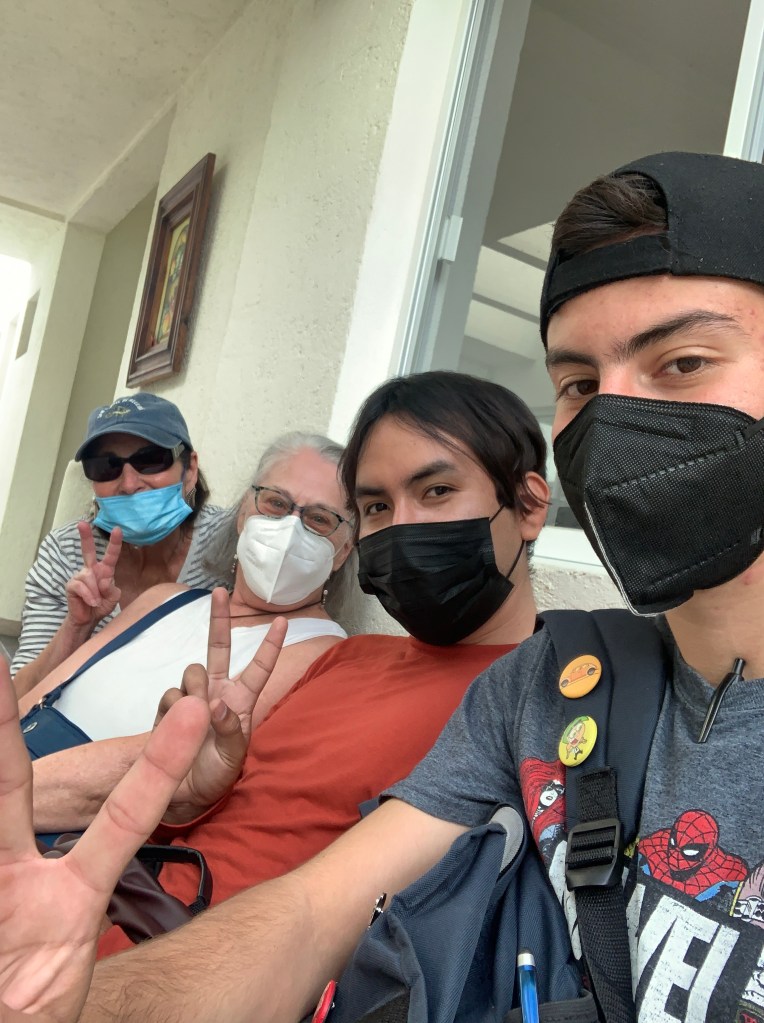
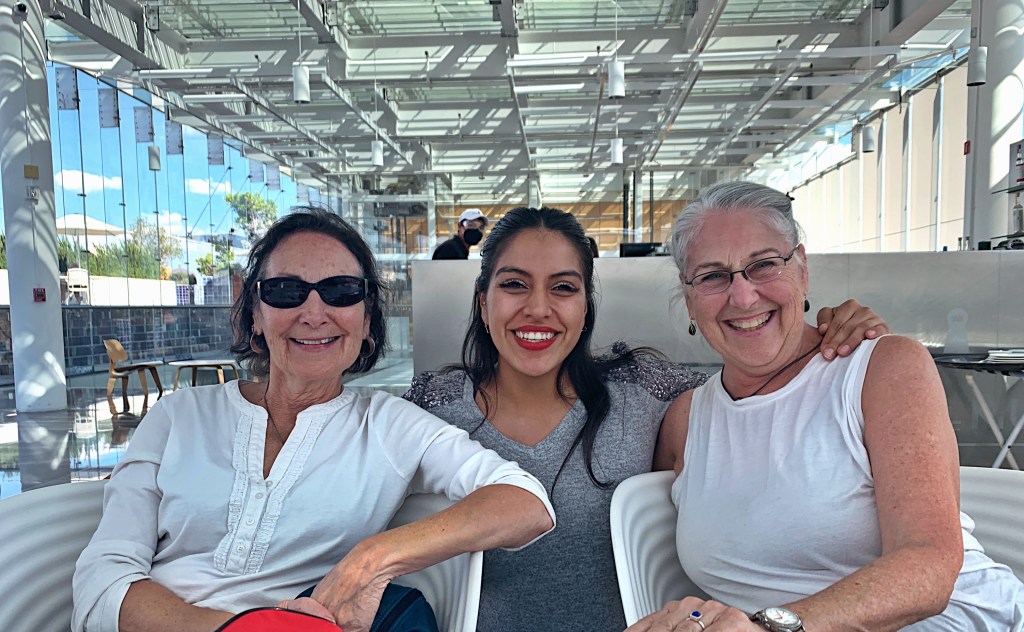
Sofia, my wonderful host (on the left in the photo below), is a joy to be around. I stayed with her in 2019 and was grateful to be back. Her daughter and grandson live with her in a home very close to the Institute. She has been hosting for about five years and has great stories of her guests. She is proud that many return again and again. I enjoyed sitting around the kitchen table eating and talking. She also loves to “ir de paseo” – going for a drive to remarkable places.
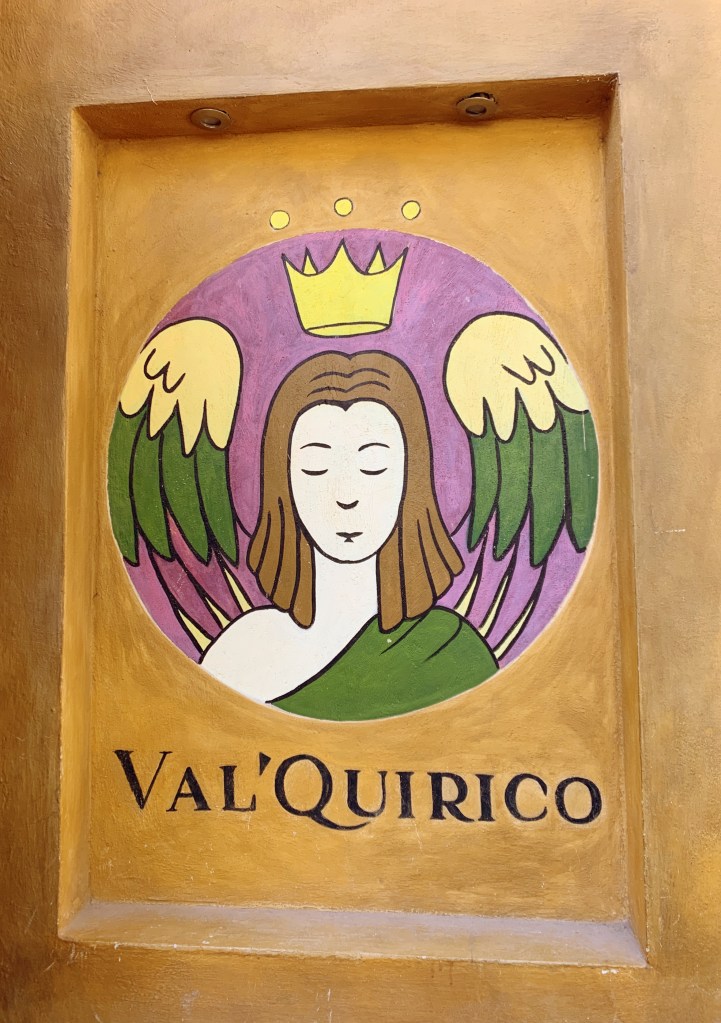
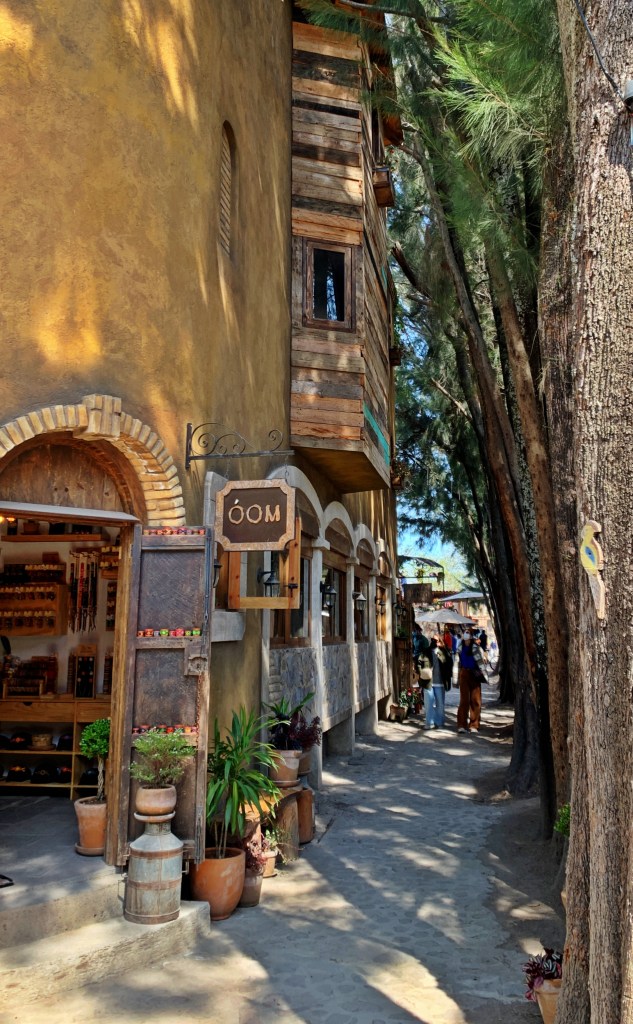
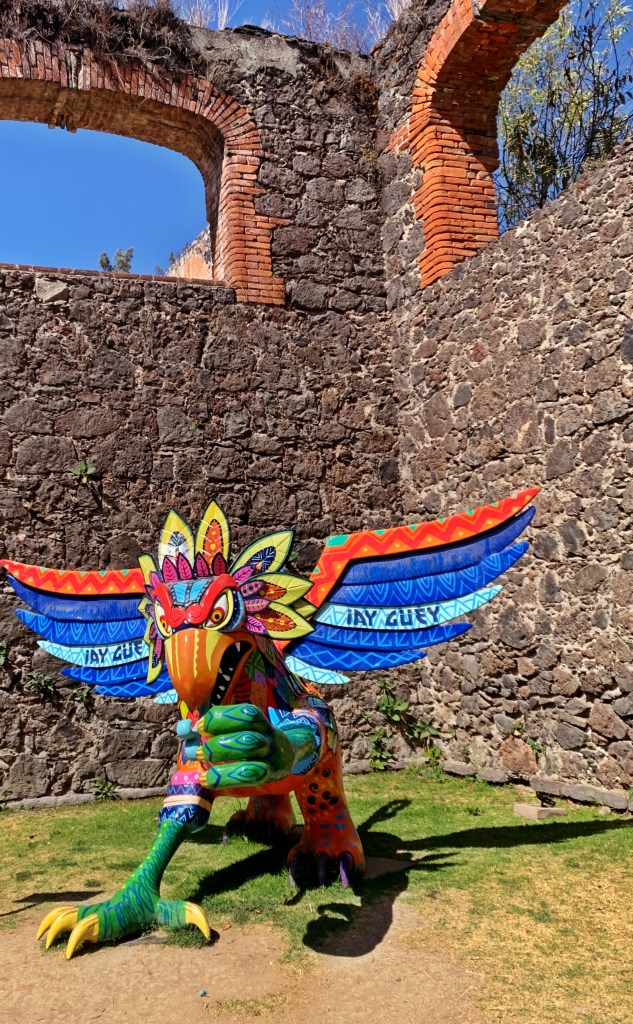
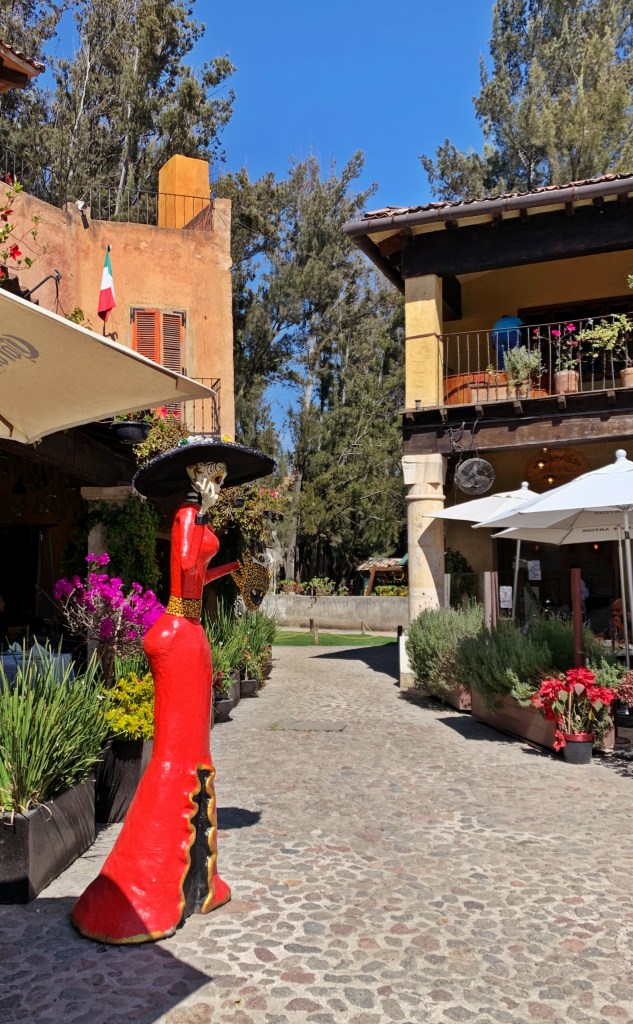
My first full day she and her daughter took me to Val’Quirico, a European styled village designed for tourists. I loved the many live music venues. It was crowded with families – not many tourists.
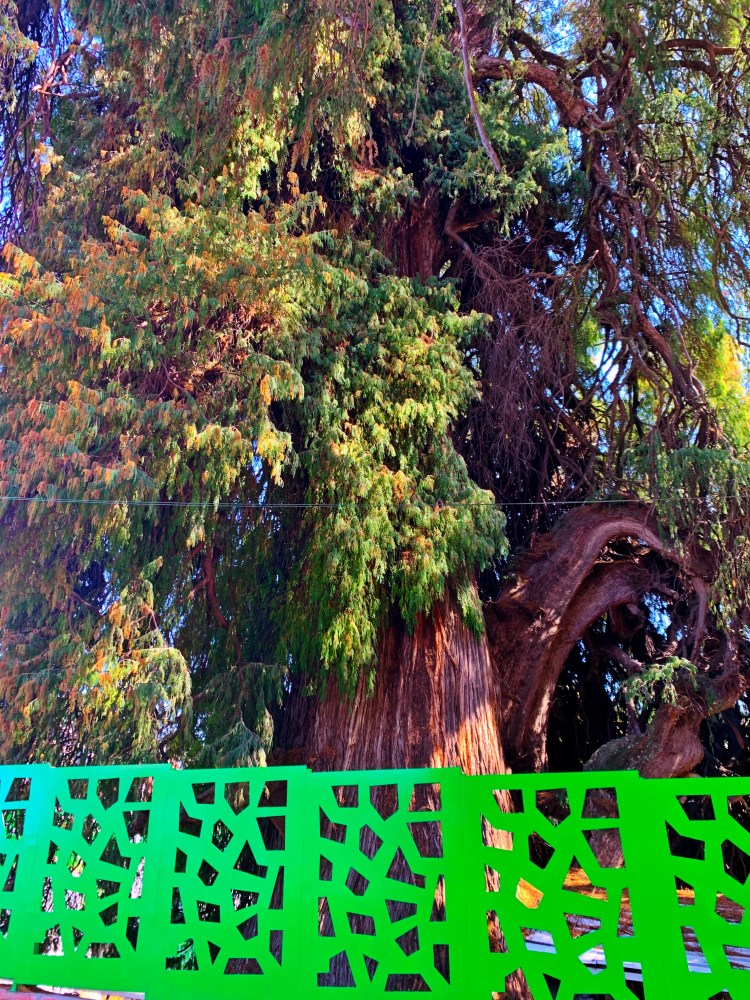
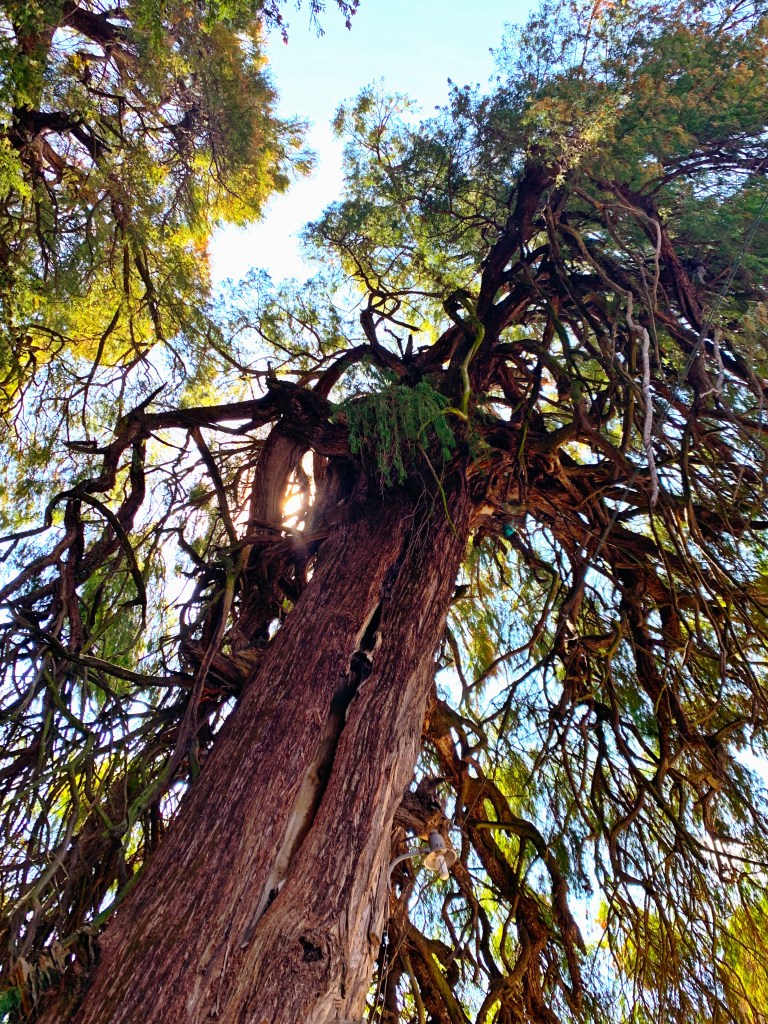
Sophia drove to our second “paseo” and her good friend joined us. I loved traveling with those two! From the back seat there were shouts of “watch out for the speed bump” – and there were lots of them! Sophia was taking us to see the Ahuehuete in Cholula – an ancient tree native to Mexico. In the indigenous language of Náhuatl the name means “an old tree of water”, as it grows where this is a lot of water. This tree is huge! I saw another one outside of Oaxaca which is more celebrated. Sophia had thought she knew right where it was, but that was not the case. Rather than refer to Google Maps, she would spot someone along the street, roll down her window, and say “!Oye!”. She did this about ten times before we actually found the tree – what fun!
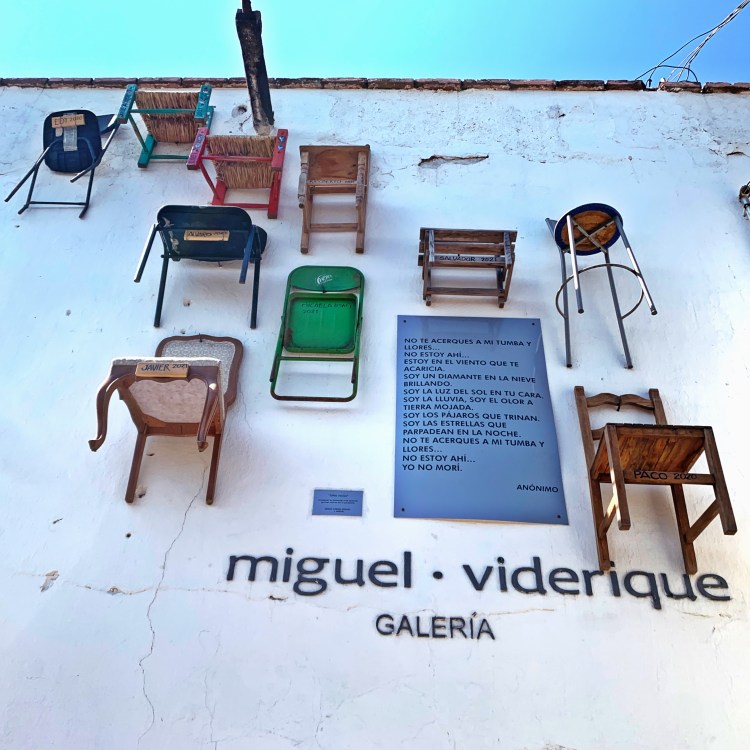
On our way home we passed a museum with an interesting display of chairs on their exterior wall, along with a poem. Each chair has a name and a year written on them and the following poem
Don’t stand by my grave and weep . . .
I am not there . . .
I am in the wind that caresses you.
I am a diamond shining in the snow.
I am the light of the sun on your face.
I am the rain, I am the wet smell of the earth.
I am the birds that chirp.
I am the stars that blink at night.
Don’t stand by my grave and weep . . .
I am not there . . .
I did not die.

Anonymous
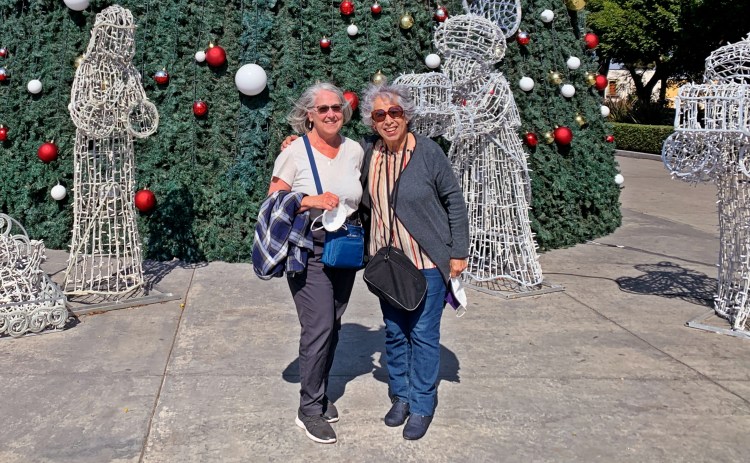
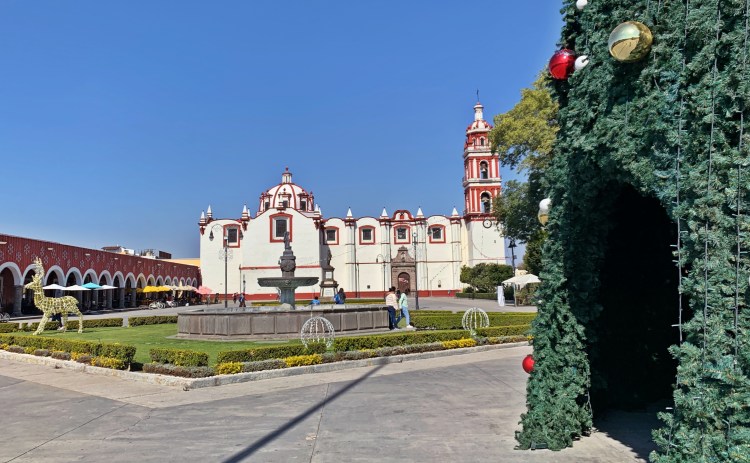
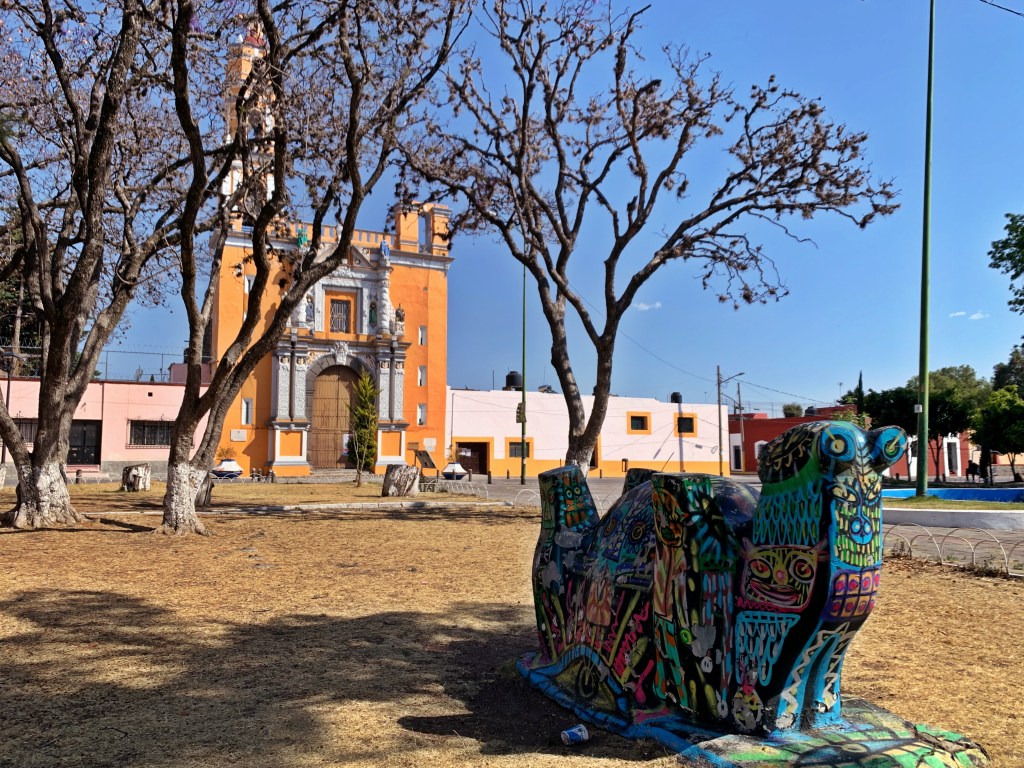
Before we left Cholula we had a lovely meal and stopped near the Plaza for a beer and photos with the Christmas tree. Paseos with Sofia are a treat!
Conversation Guide Adventures
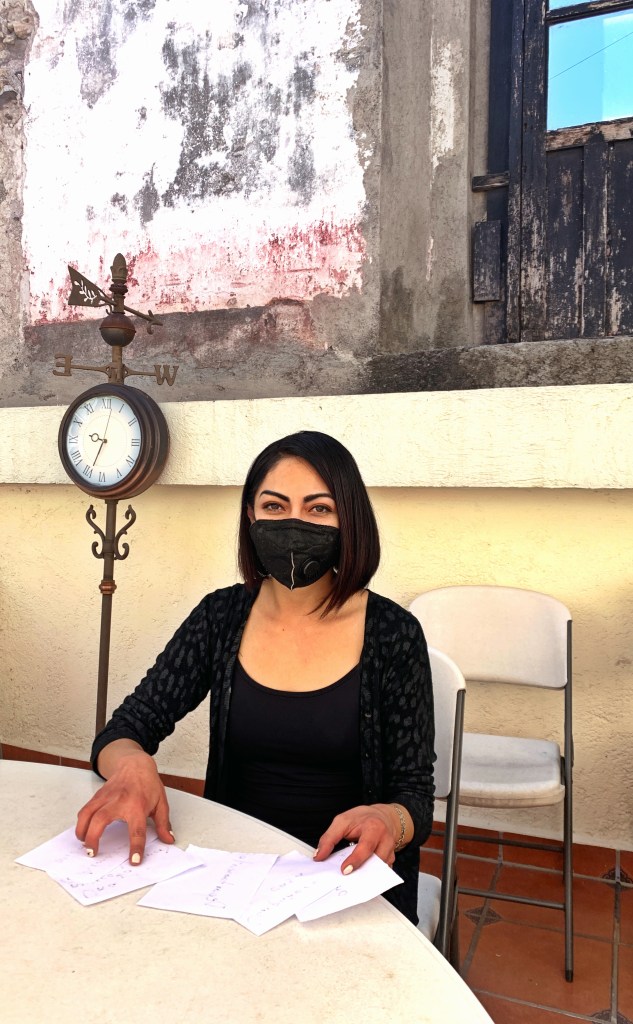
Each week we were assigned a different conversation guide. Each day we had two hours together to do as I pleased – in Spanish. We are given a list of local museums, churches, parks, and other interesting things to do in Puebla. Many of the museums were not open due to COVID, but there was still so much to see. I am a fan of the churches, so we visited many of them. Since there are so many, I will cover them in a future post. We also would go to a cafe, drink a limonada and talk. When I didn’t want to wander we watched “Selina, El Serie” in Spanish, with Spanish subtitles. The guides were generally young women, and in, or just graduated, from university. They were very helpful in keeping me alive – they would hold me back as I stepped into an intersection that I thought was safe. They all seemed to be great people and I loved discussing our views of Mexico, the world, and our places in them.
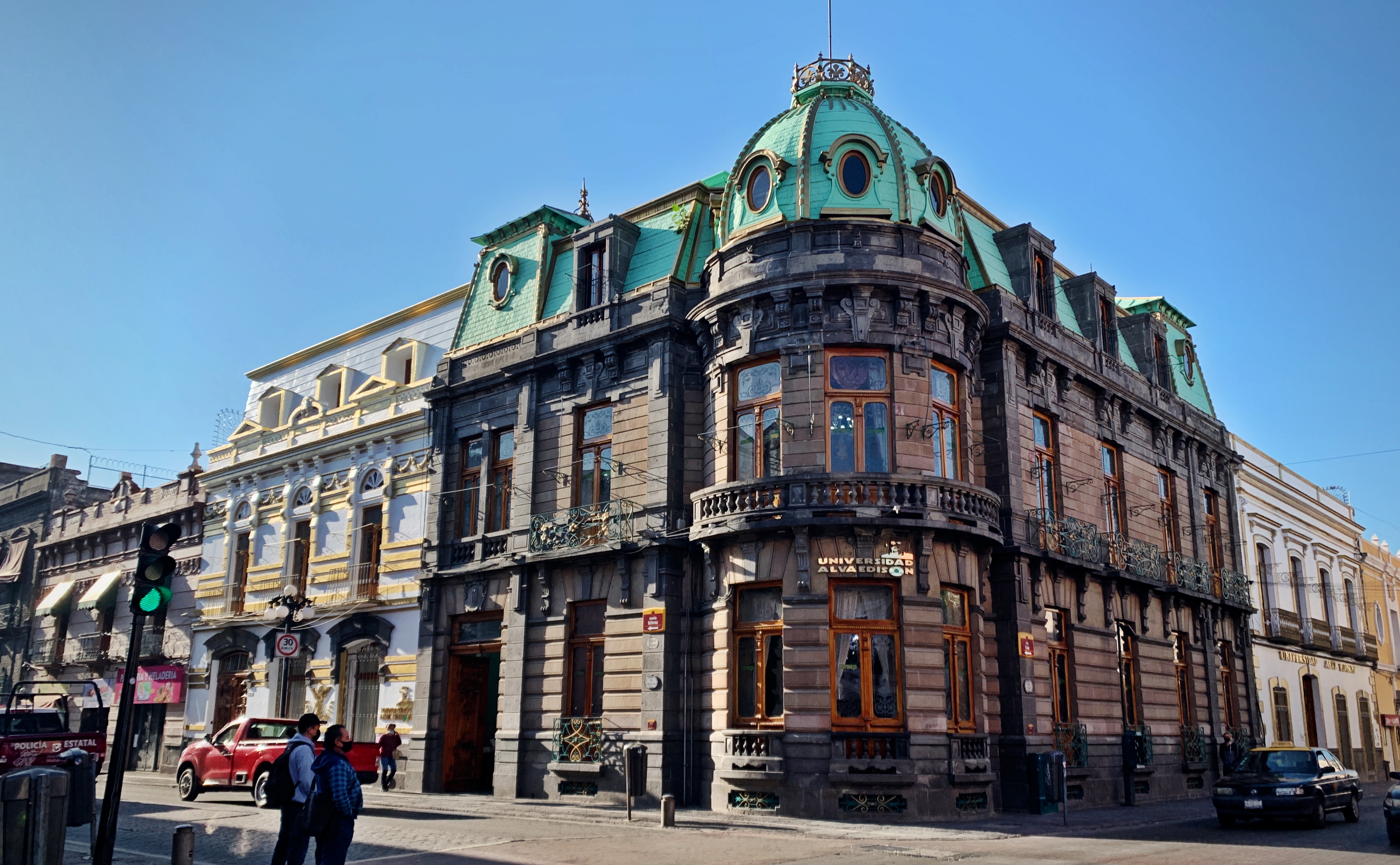
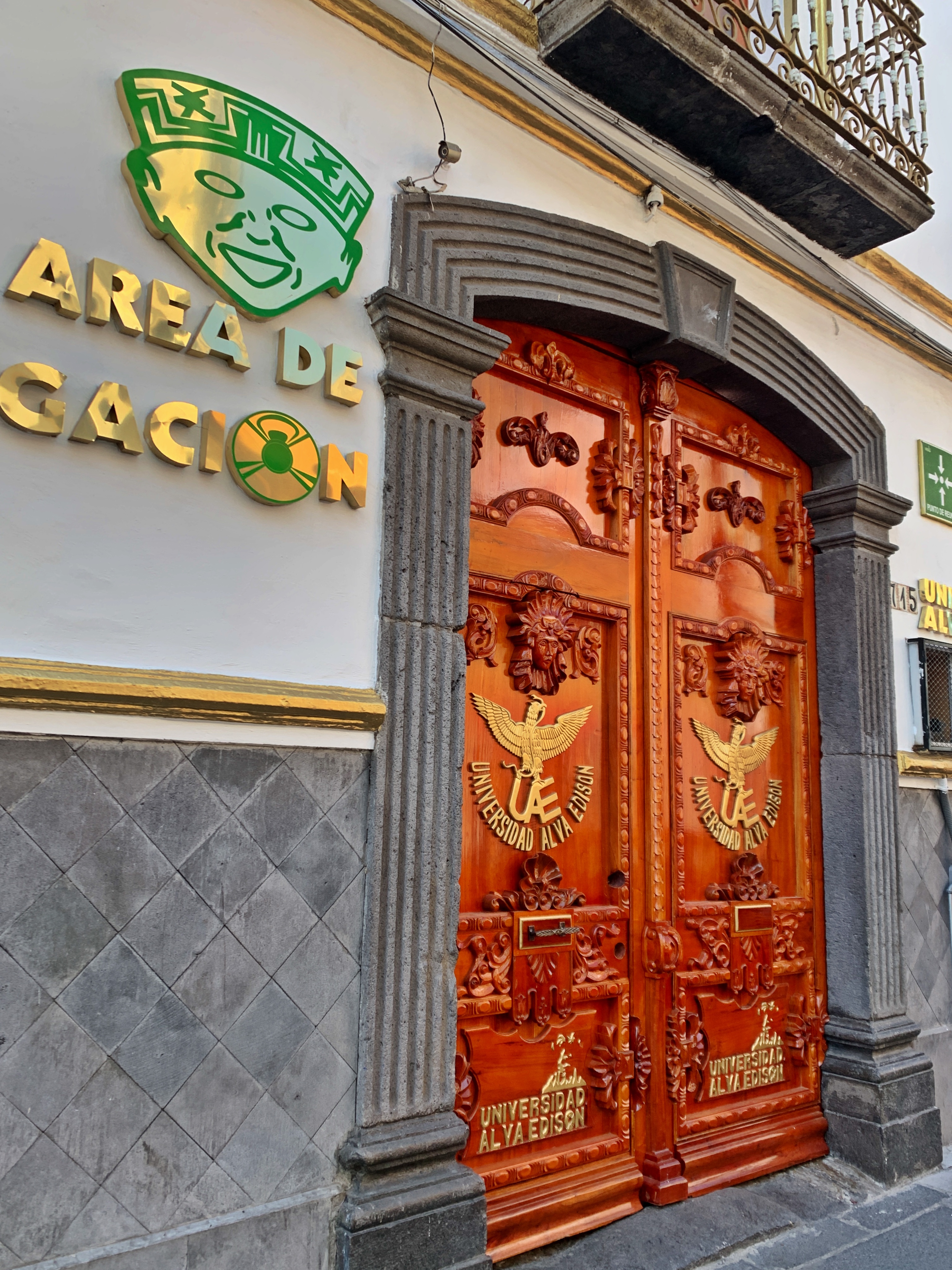
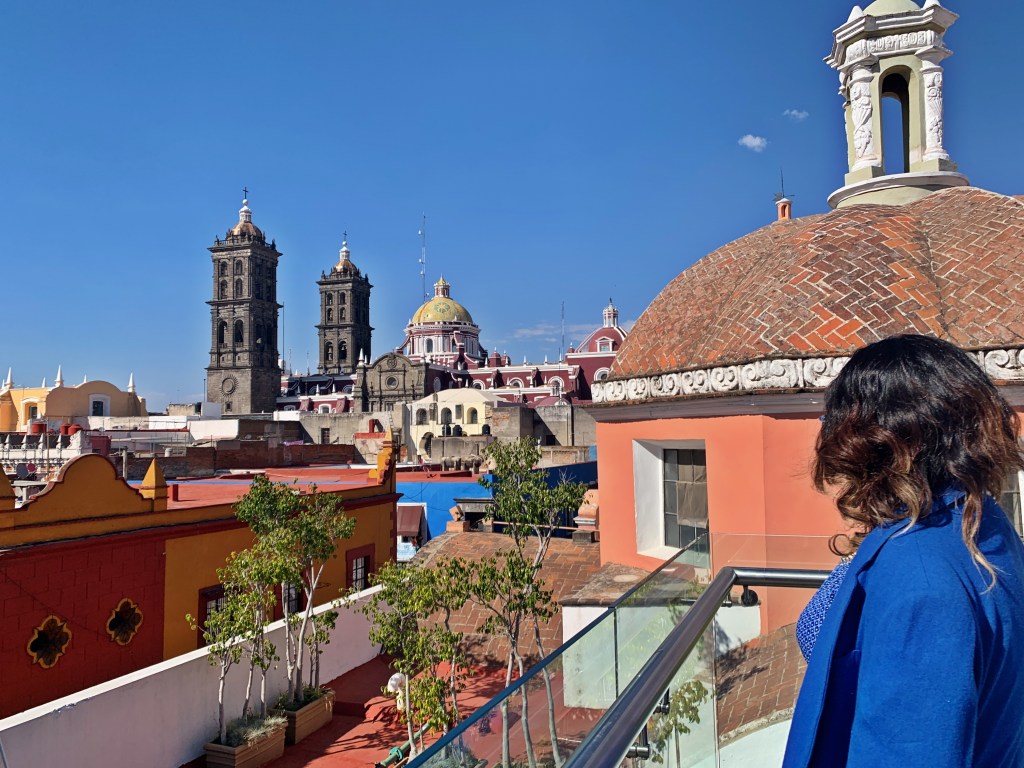
As we wandered the streets of Puebla, I noticed that some of the most beautiful buildings were Universities (see two photos below) – and there are a lot of them! I was told that in Mexico (or was it the state of Puebla?) when a building owner dies with no heirs it is then available, at no cost, to universities and other public entities.
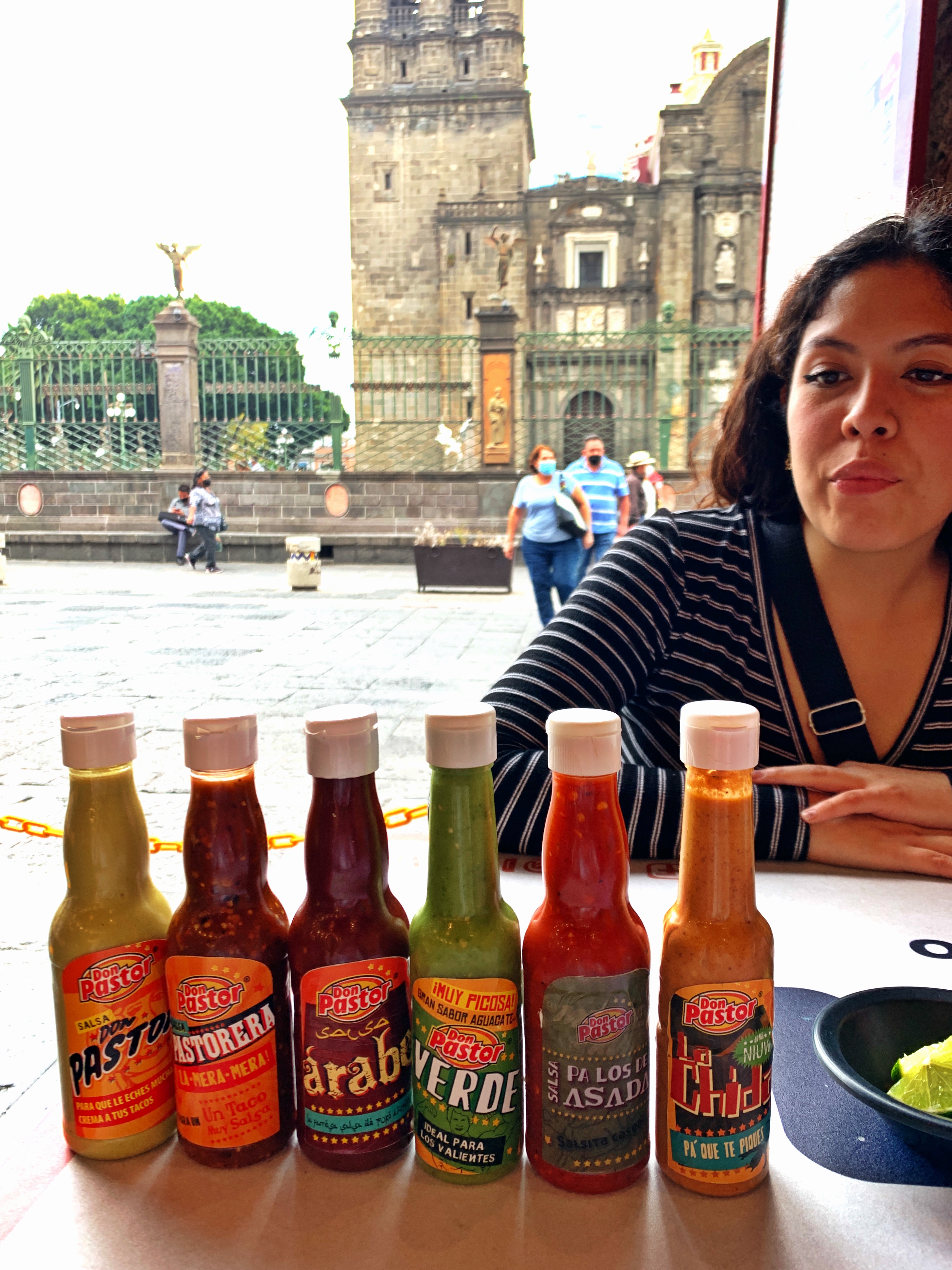
Don Pastor restarurant in front of the Cathedral
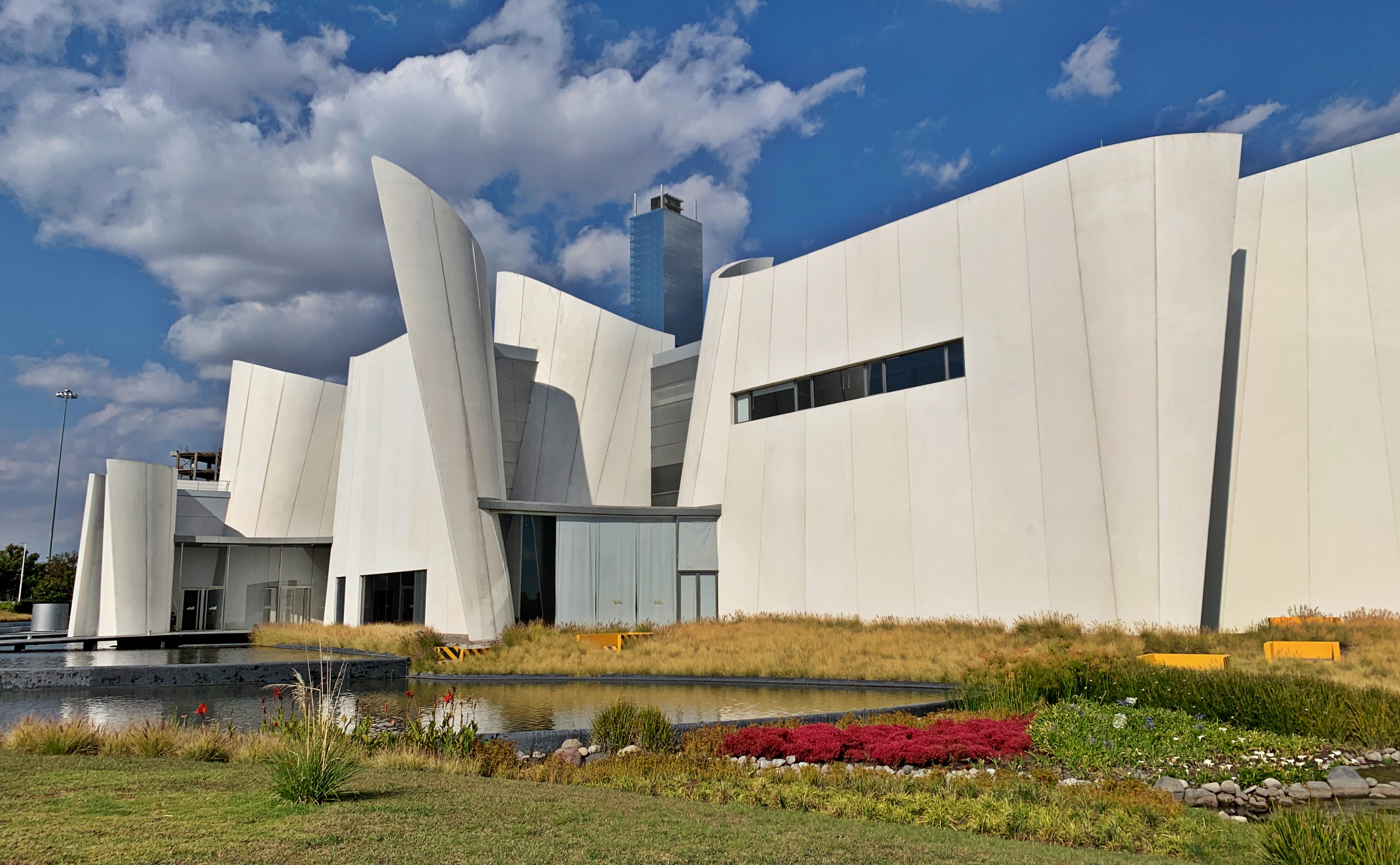
Museo Amparo
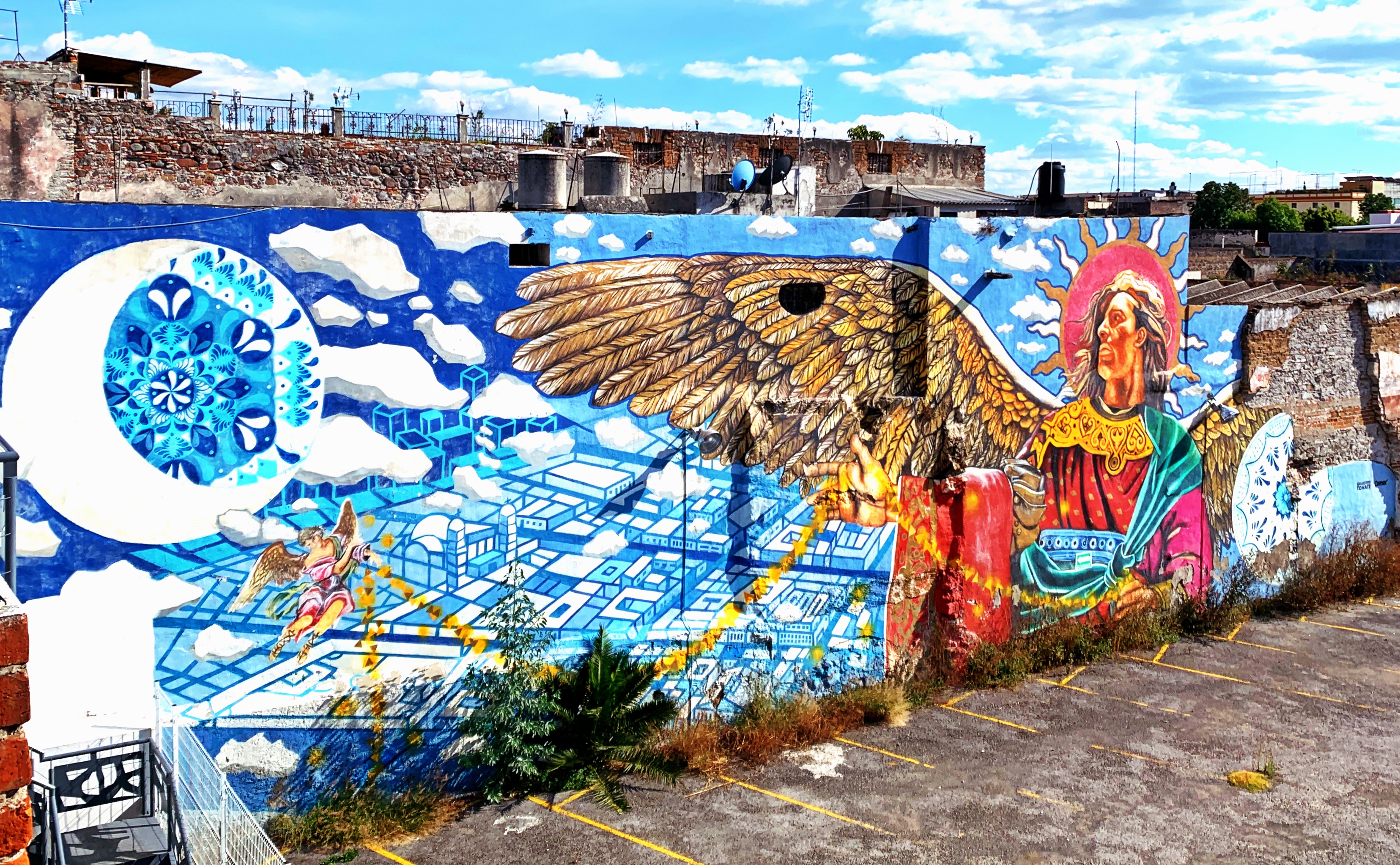
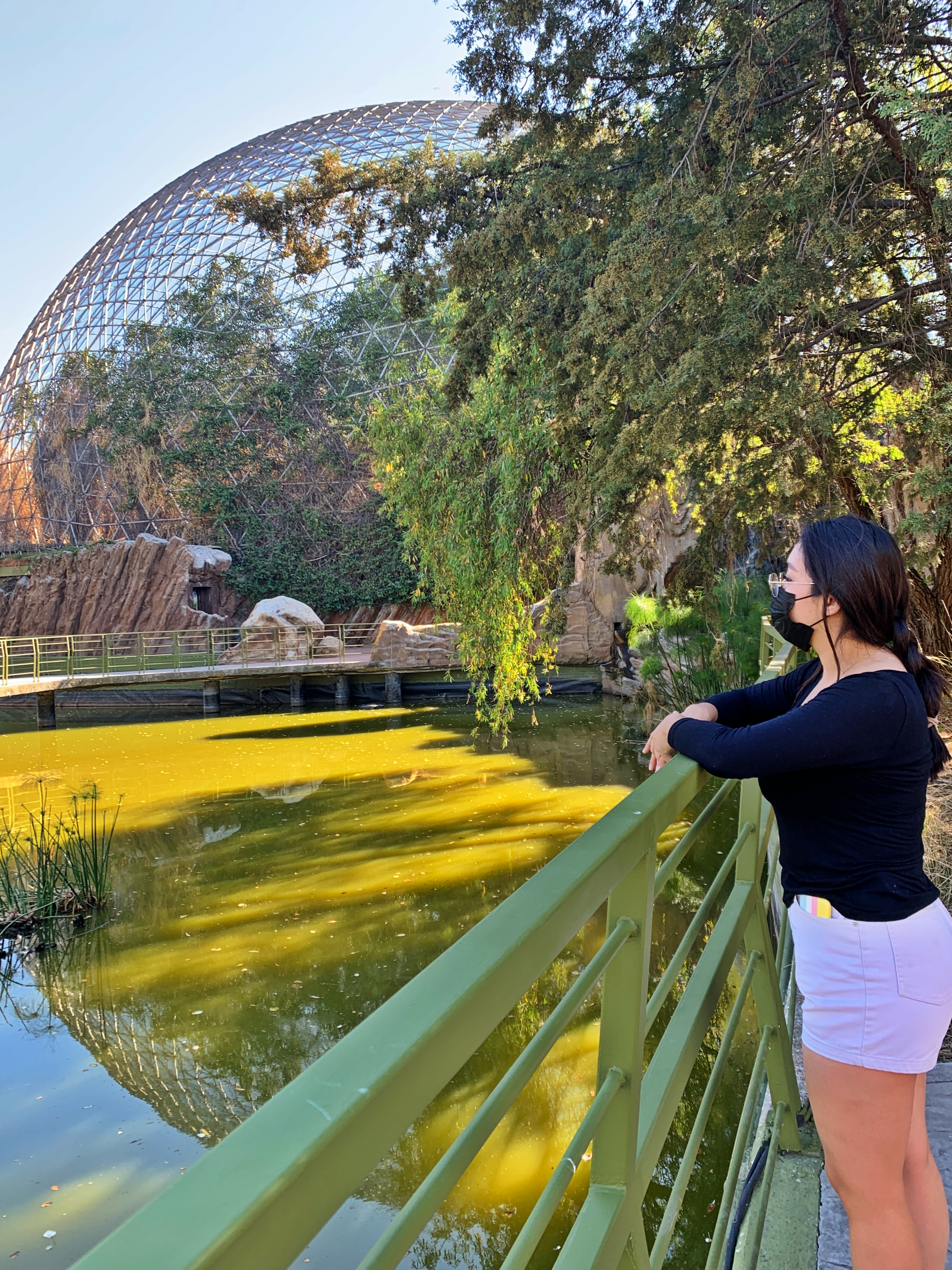
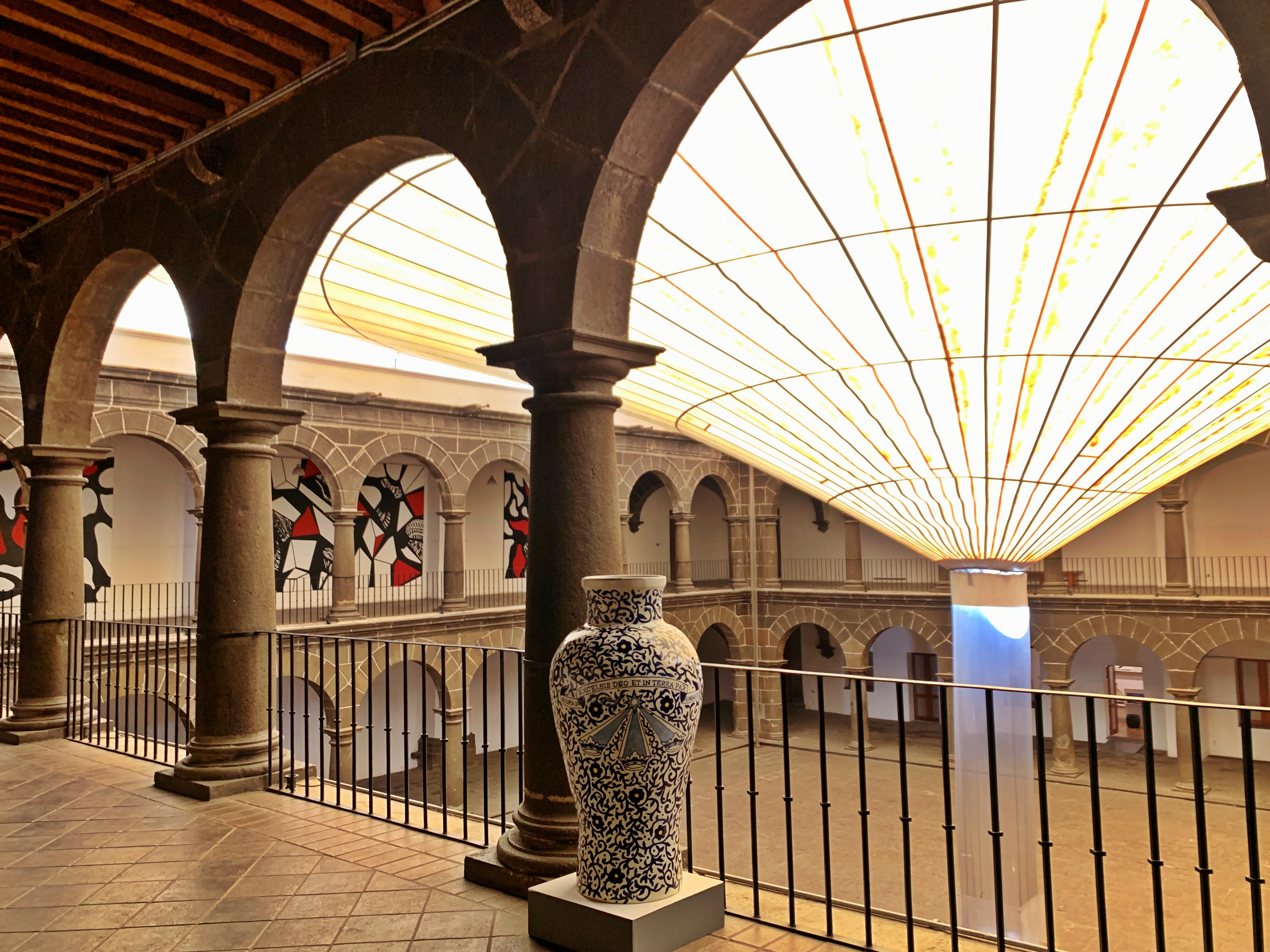
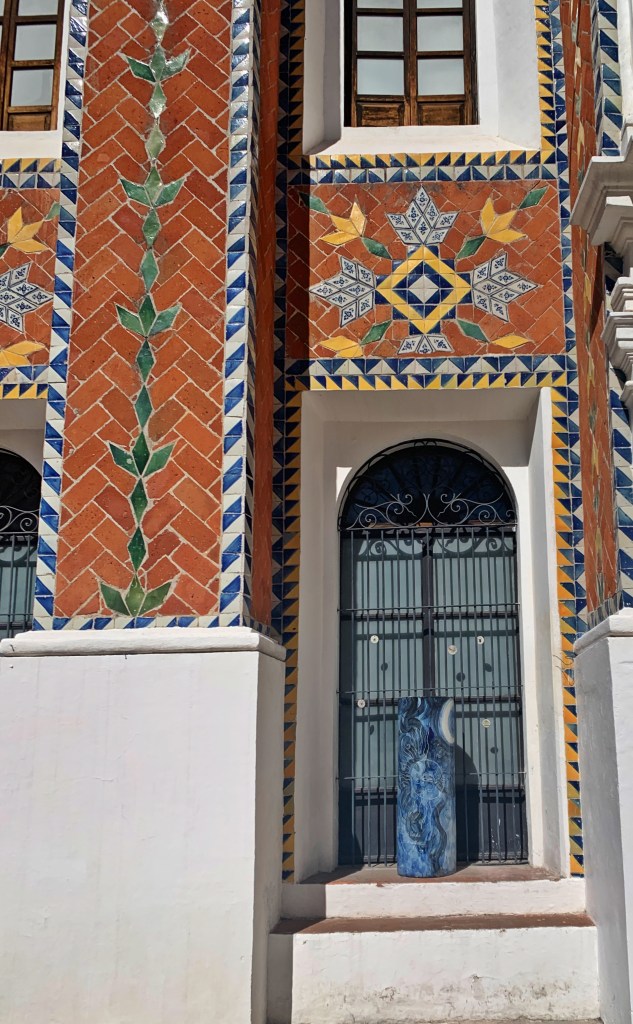
after a long afternoon of sights
Excursions!
Cholula
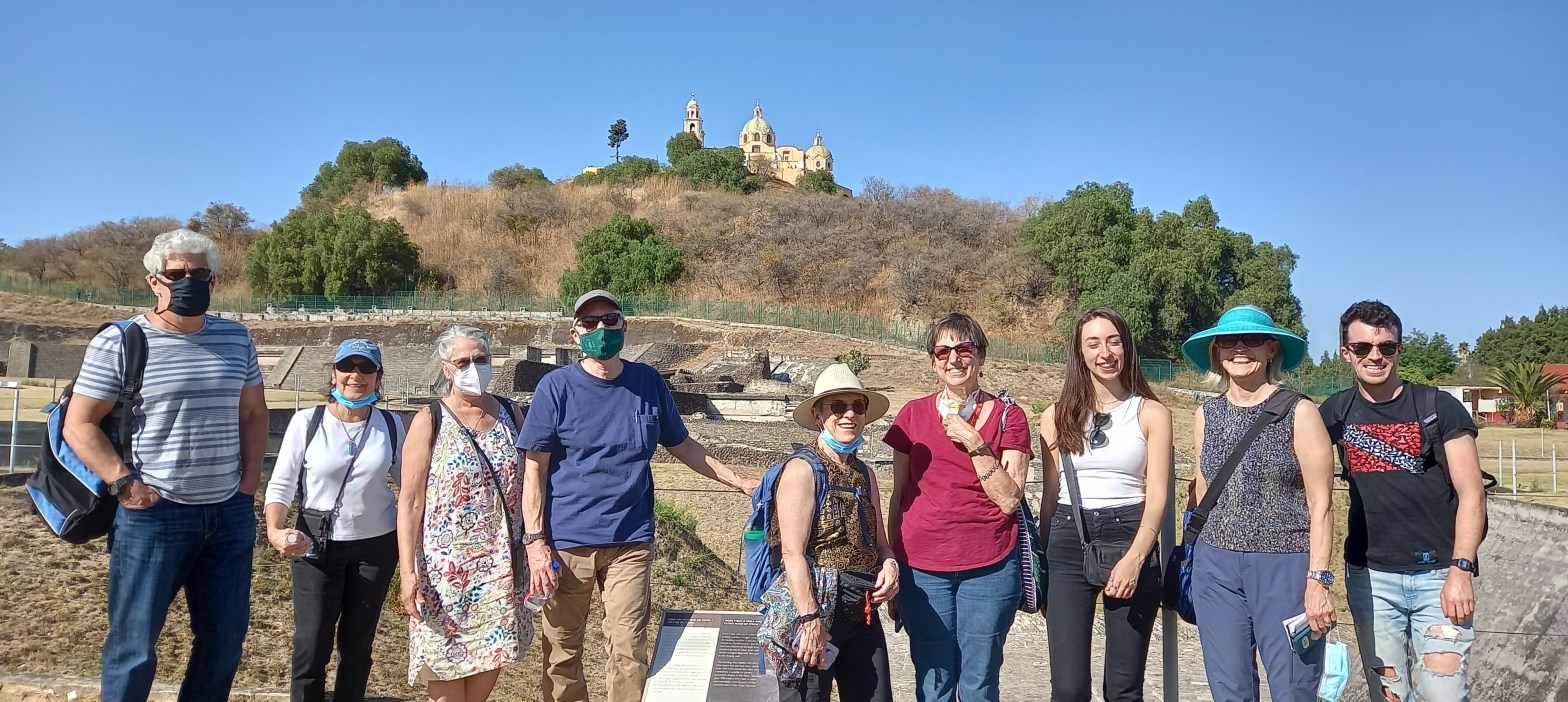
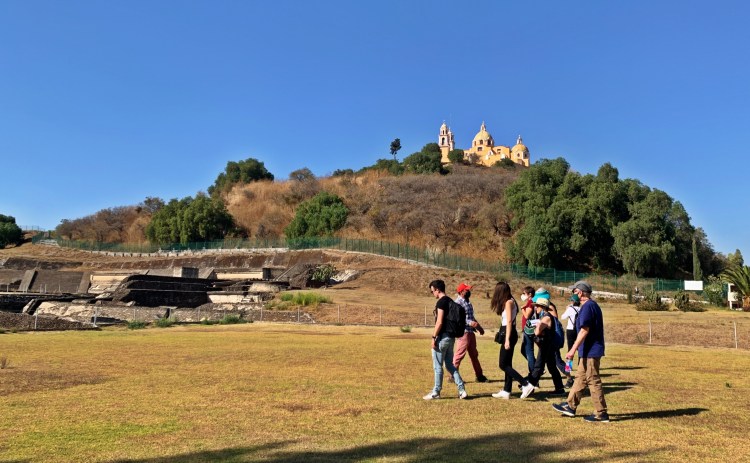
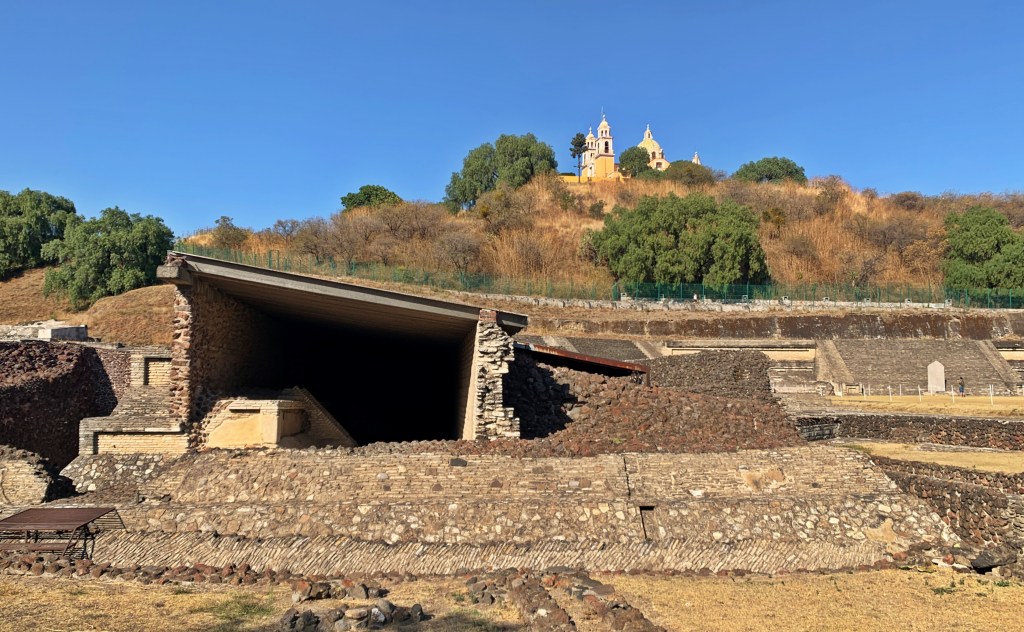
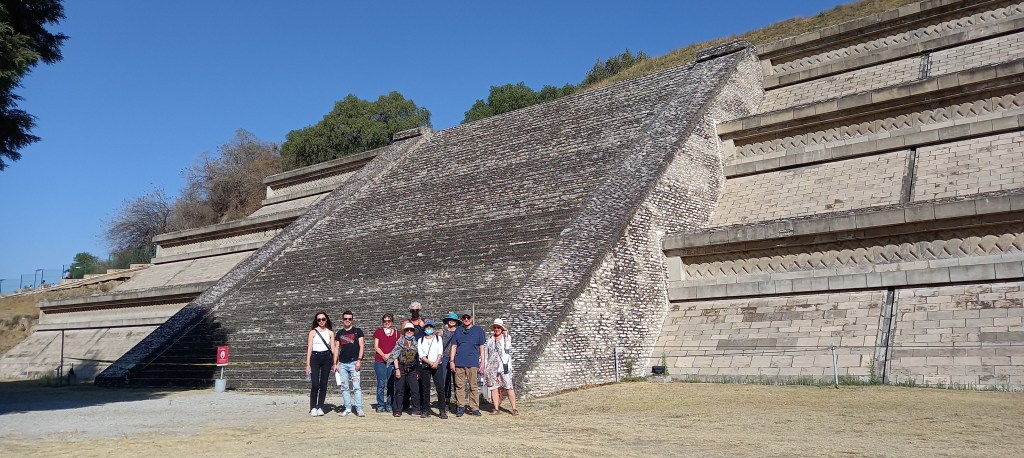
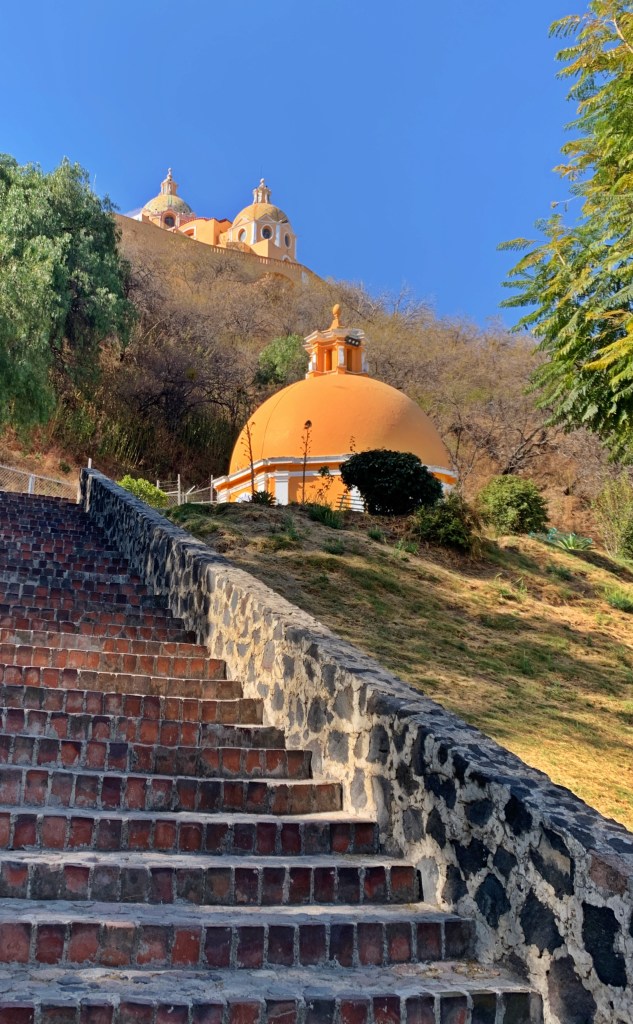
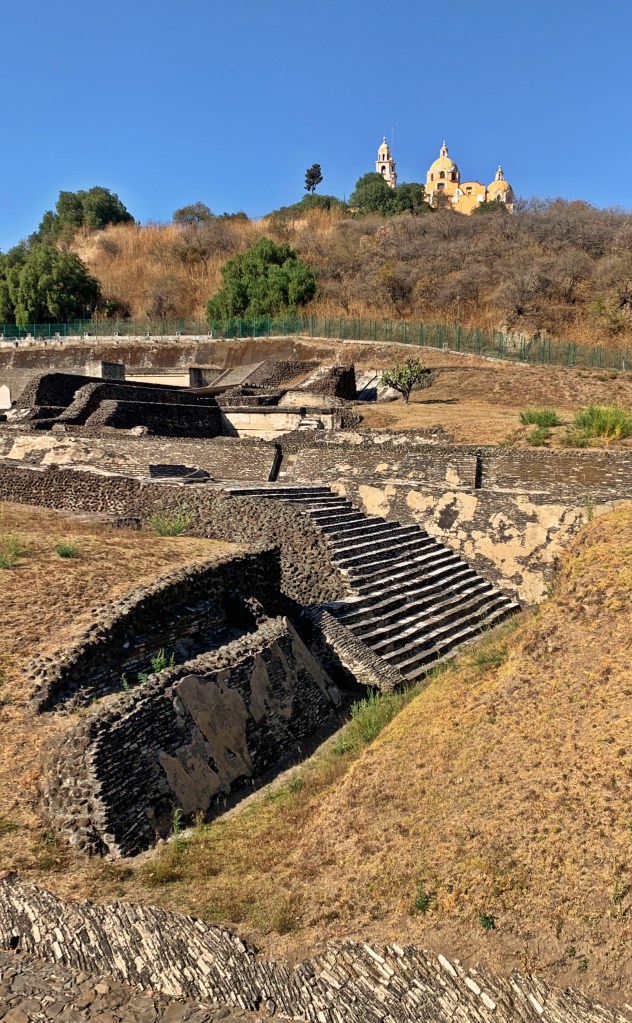
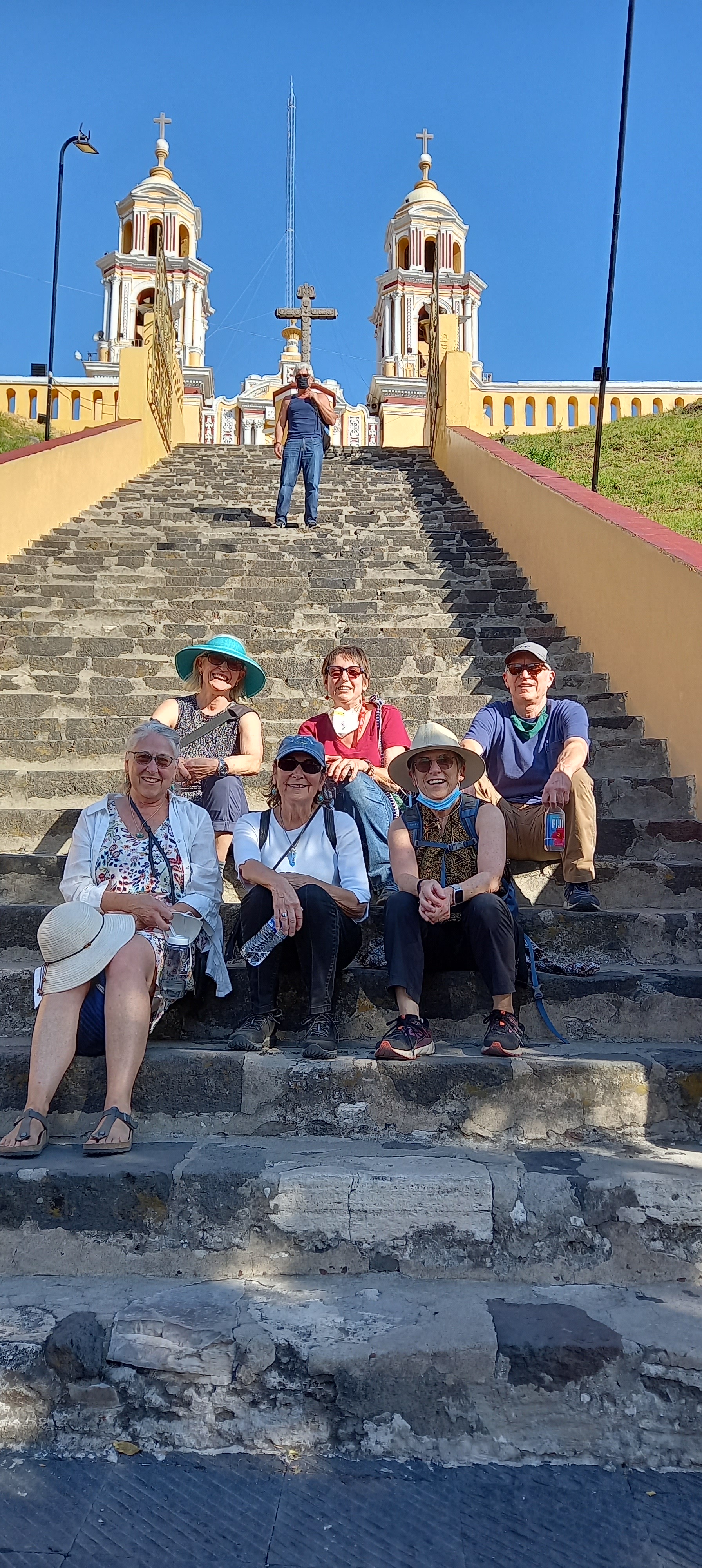
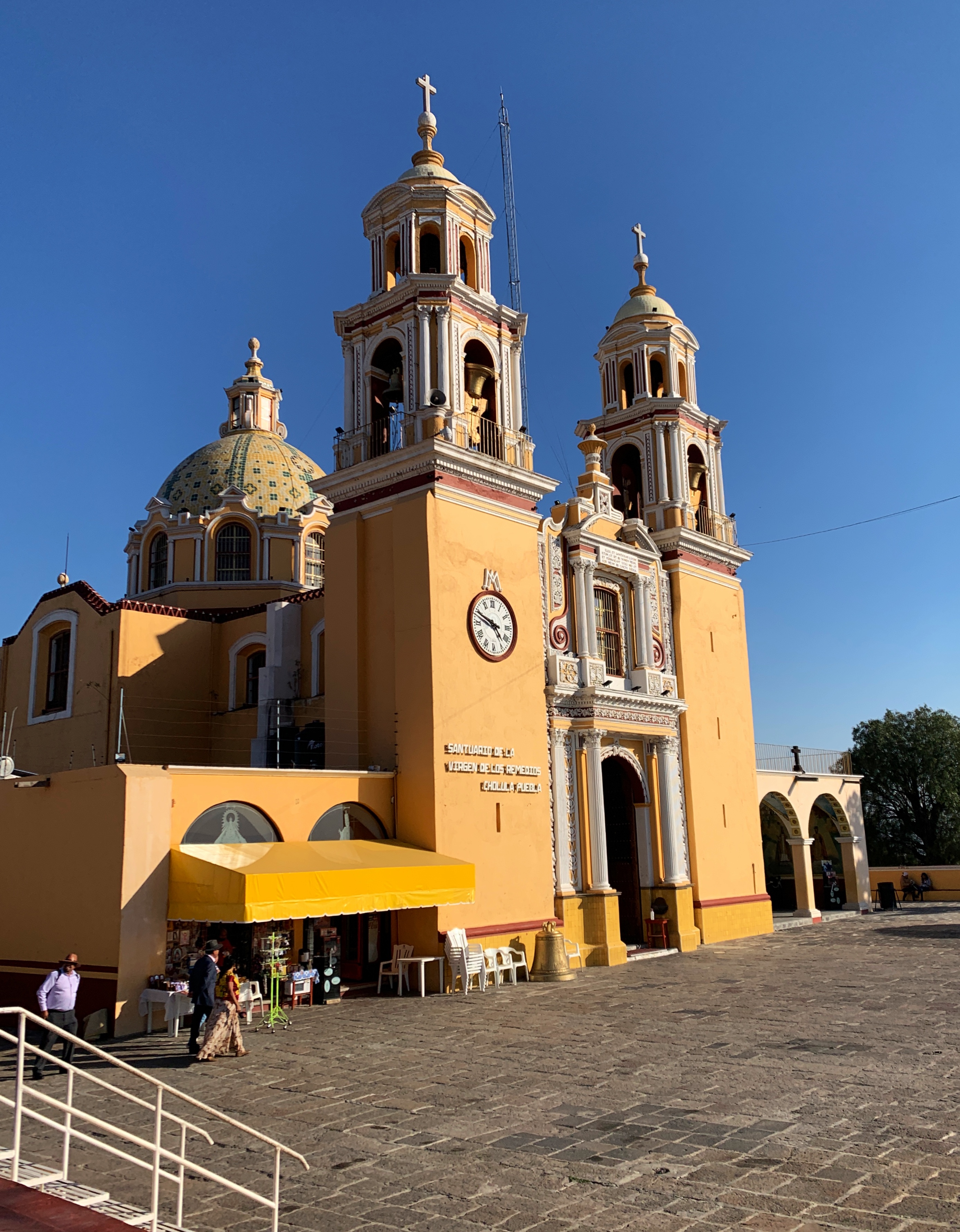
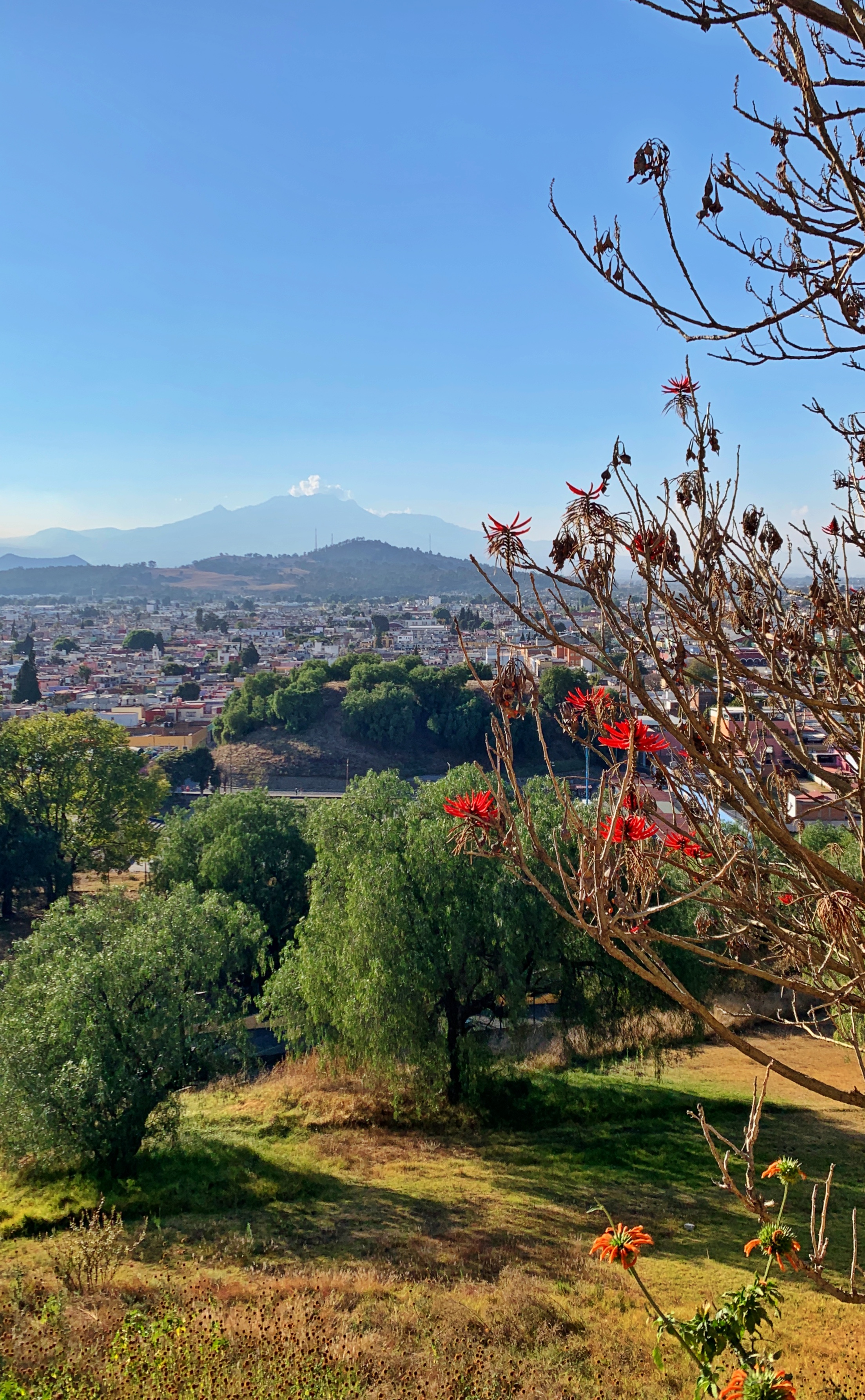
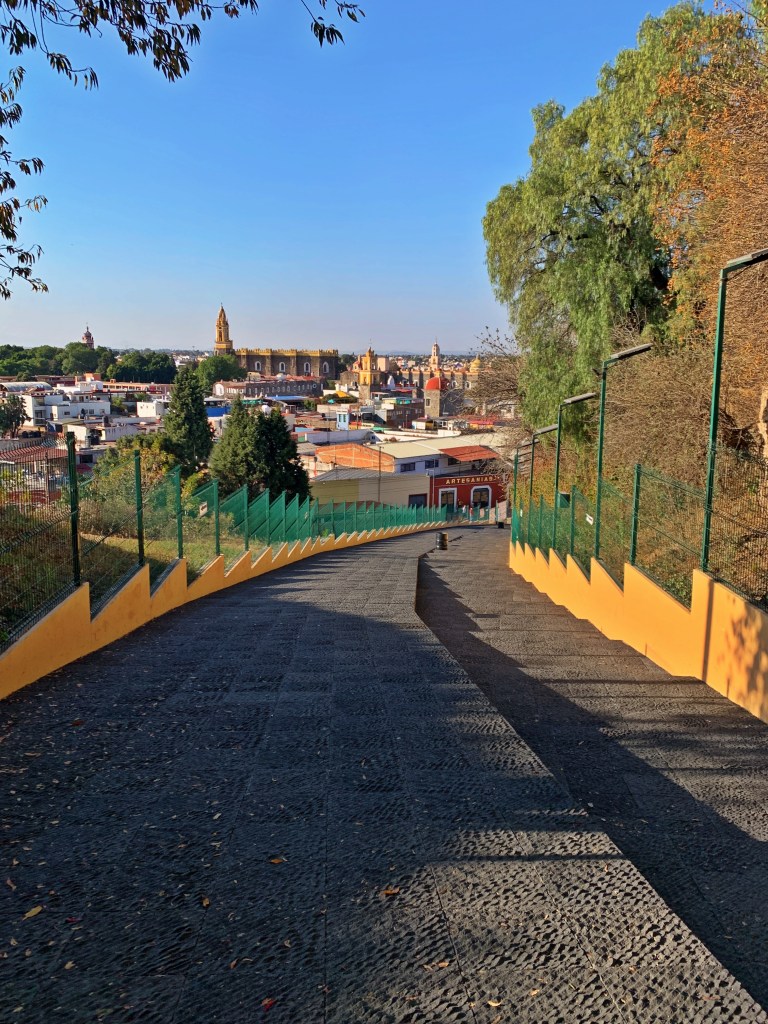
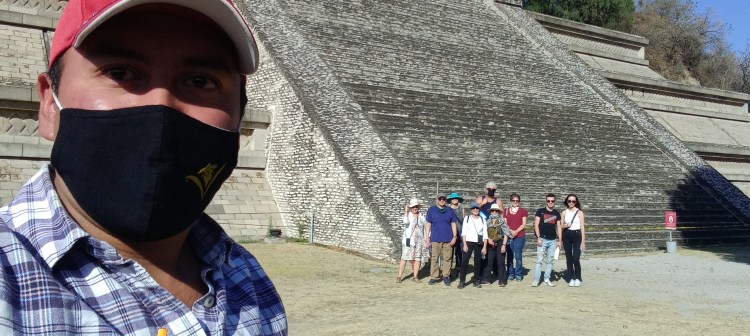
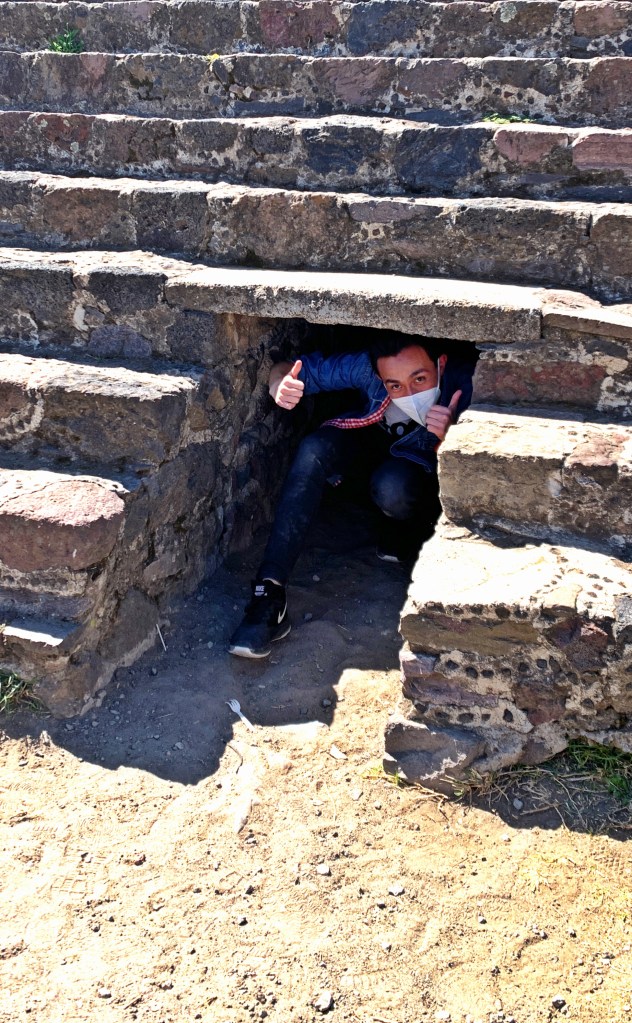
Offered once each three-week course, these two excursions are a highlight. The first one, Cholula, was quite popular with nine students participating. Our guide ushered us all into a van and we drove to the Great Pyramid of Cholula, also known as Tlachihualtepetl. The construction of the church on top was started in 1574, even though the Spaniards knew the significance of pyramid underneath. Or, more likely, they built it because of the significance. The pyramid was re-discovered in the early 1930’s and excavations were underway through 1970. No further excavations are allowed due to the risk of harming the church. (I find this an interesting repeating concept in Mexico: pre-hispanic vs. Spanish. ) During the explorations five miles of tunnels were built within the pyramids. These are closed now due to COVID. However, I had a chance to wander through them with my grandson, Sebastian, in 2019. They gave me a strong feeling of claustrophobia, so I was grateful I didn’t do that again. Mexico is very proud of the fact that theirs is the largest pyramid in the world – not in height, but in volume. It has a base of 1,480 ft. by 1,480 ft. and a height of 217 ft. This seems to be a popular destination for families. I appreciate that Mexico’s history co-mingles with daily life.
Teotihuacan and Chapultepec Park in CDMX
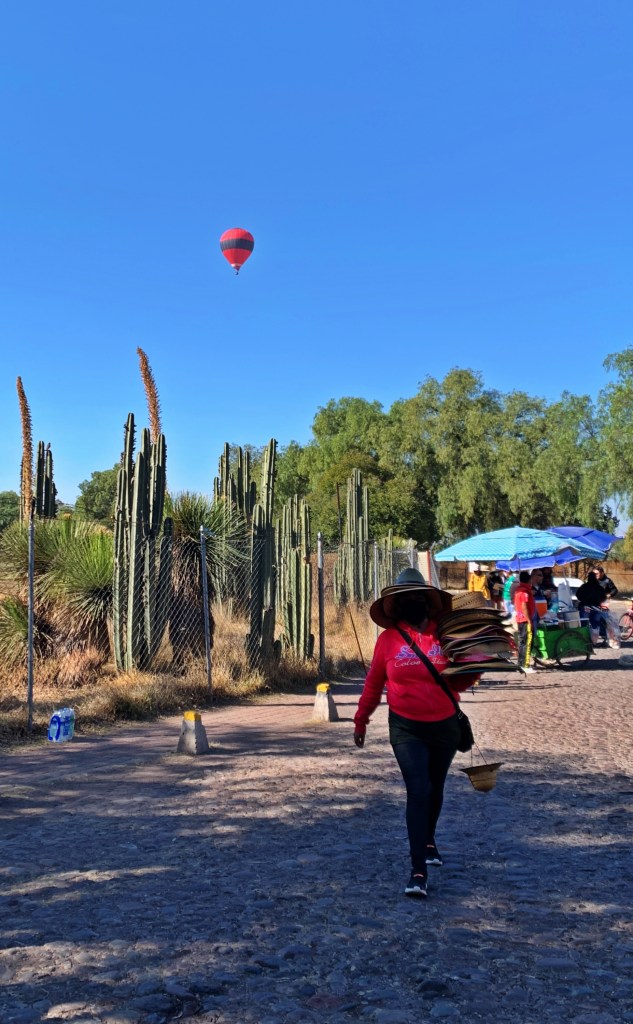
The big excursion goes to three places: the Teotihuacan pyramids, the Chapultepec Castle and the National Museum of Anthropology in Mexico City. We left at 7:30 am and returned at 7 pm. Only Robin and I signed up for the tour and we had three guides, plus the driver. The van was quite deluxe with comfy seats, air conditioning, and a large TV. It as a beautiful day and the hot air balloons were in force as we arrived.
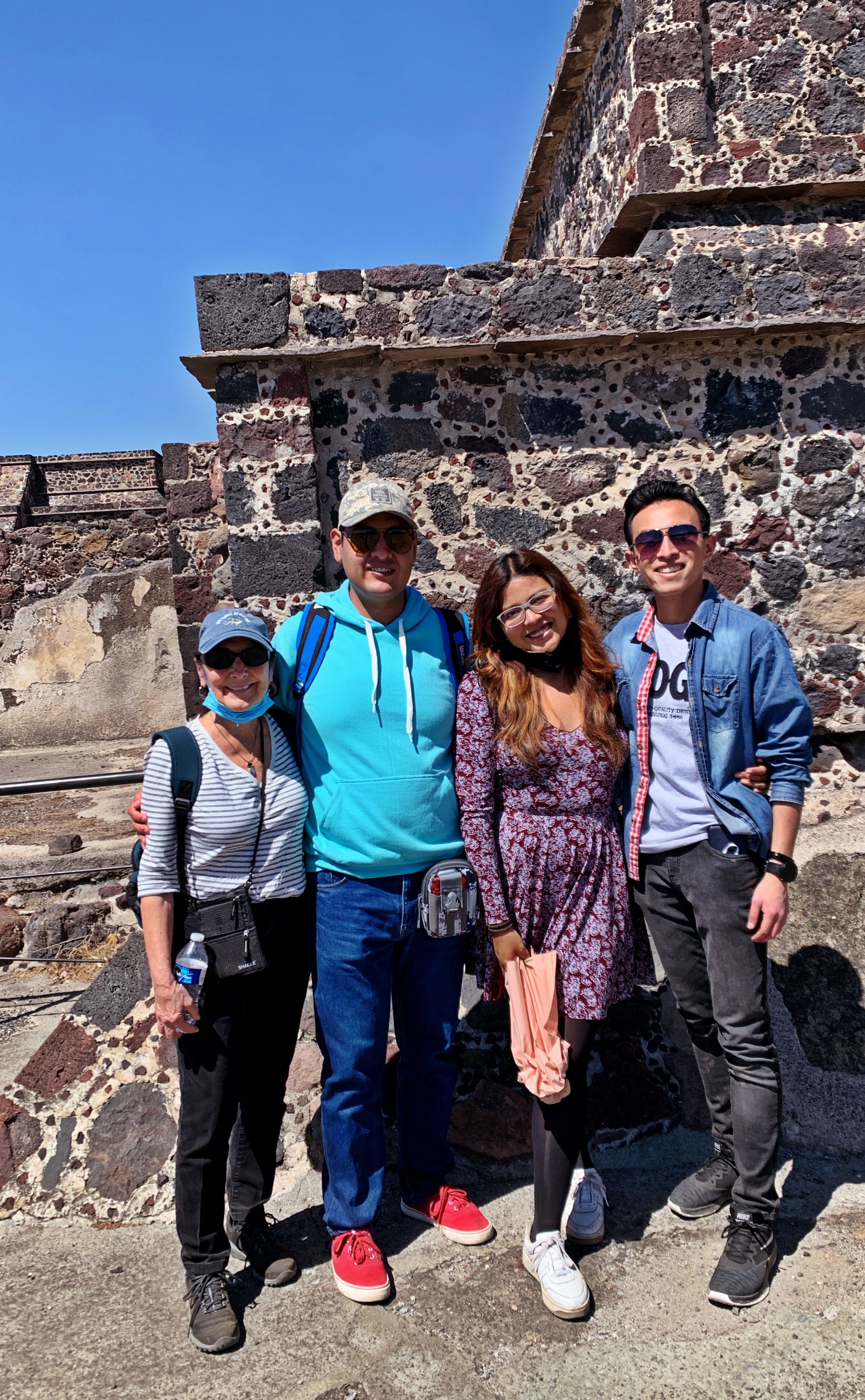
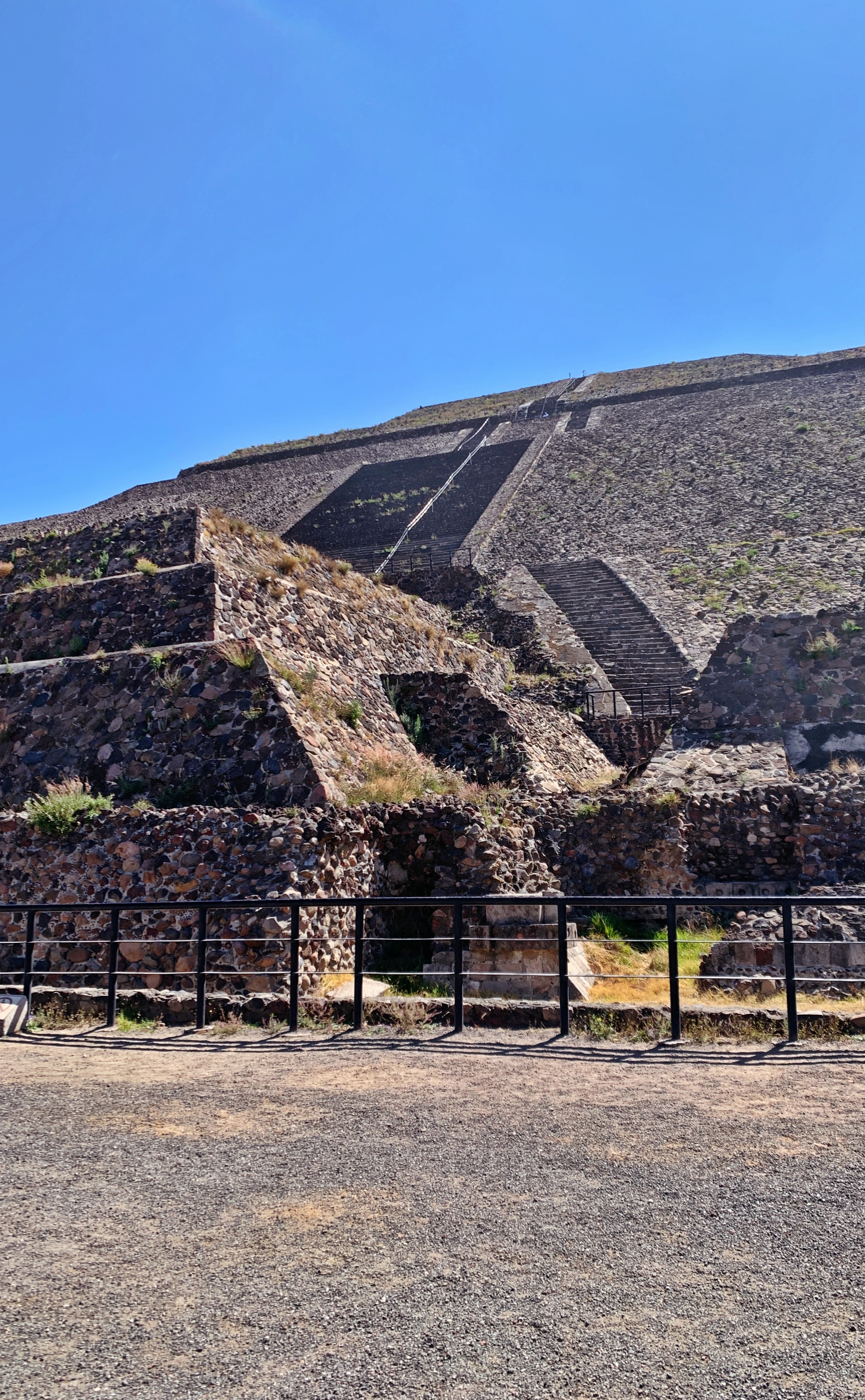
The city of Teotihuacan is one of the largest and most architecturally significant Mesoamerican pyramids built in the pre-Columbian Americas. It began as a religious center about 100 BC with its peak in 450 CE. The decline of Teotihuacan has been attributed to lengthy droughts related to climate changed of 535-536. During the 1200’s Teotihuacan was repopulated by migrant tribes, eventually controlled by the Aztecs by 1427. It was here that Cortéz, and his men, were dazzled by the riches which led to it’s demise two years later. The prominence of this city is palpable when you walk through the ruins. Trying to imagine the depth of time represented here is mind boggling.
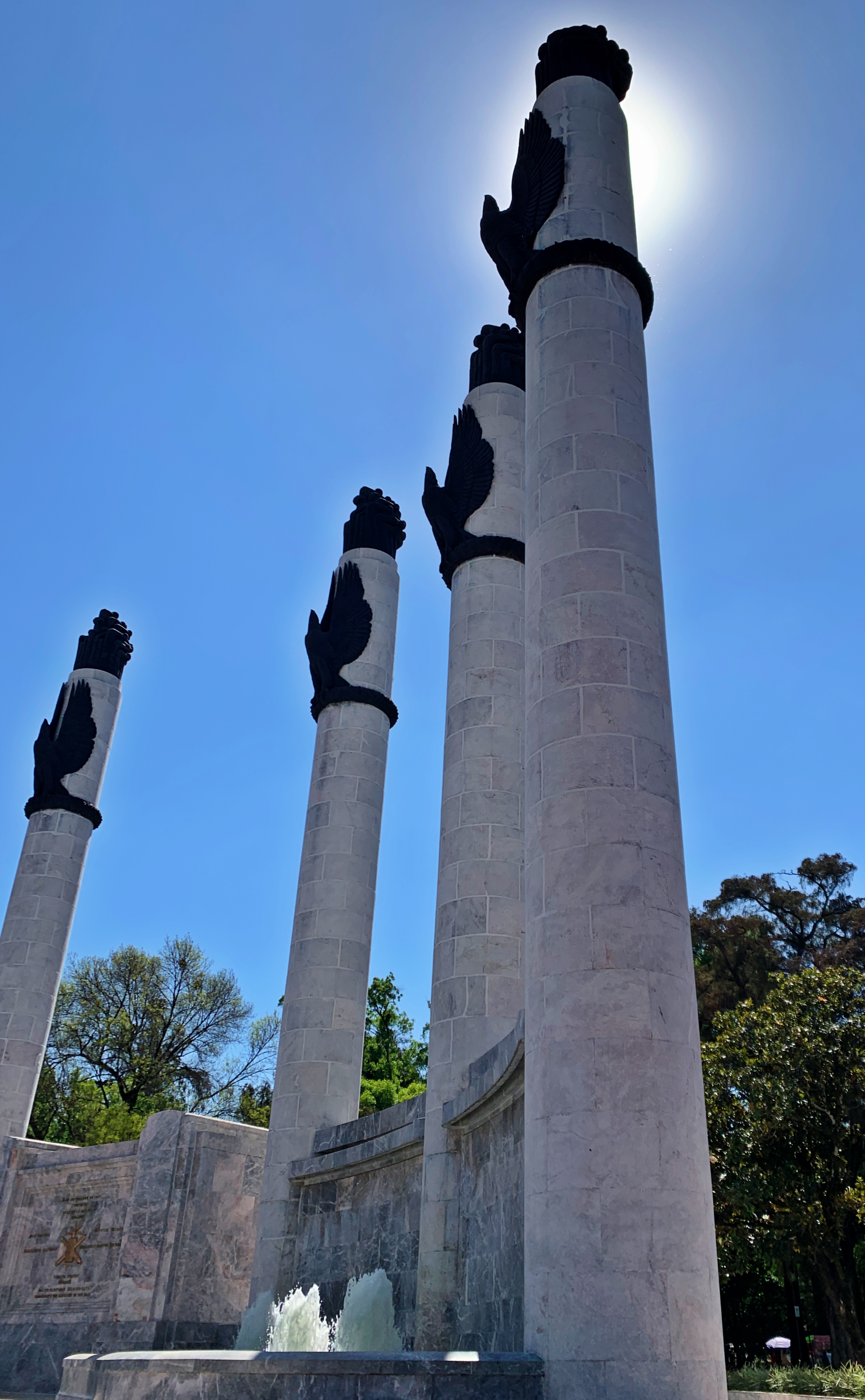
Monument to the Six Boy Heroes – This legend was my favorite as a primary student. The story I learned talks about how the US Army attacked and killed all the young men in the military school housed in the Chapultepec Castle. The legend states that six boy heroes went to the roof of the castle and, rather than being killed by the US, they jumped from the roof – one of them wrapped in the Mexican flag. These six boy were my heroes – I even wrote a poem that was selected to be read in front of my school. So, though I have read some information, this trip was the first to consistently tell me that the legend has been proven to be false. No, the US did murder all the young men in the military school, but the specific six men going to the roof and jumping off is no longer believed to be true. But . . . the monuments are still beautiful!
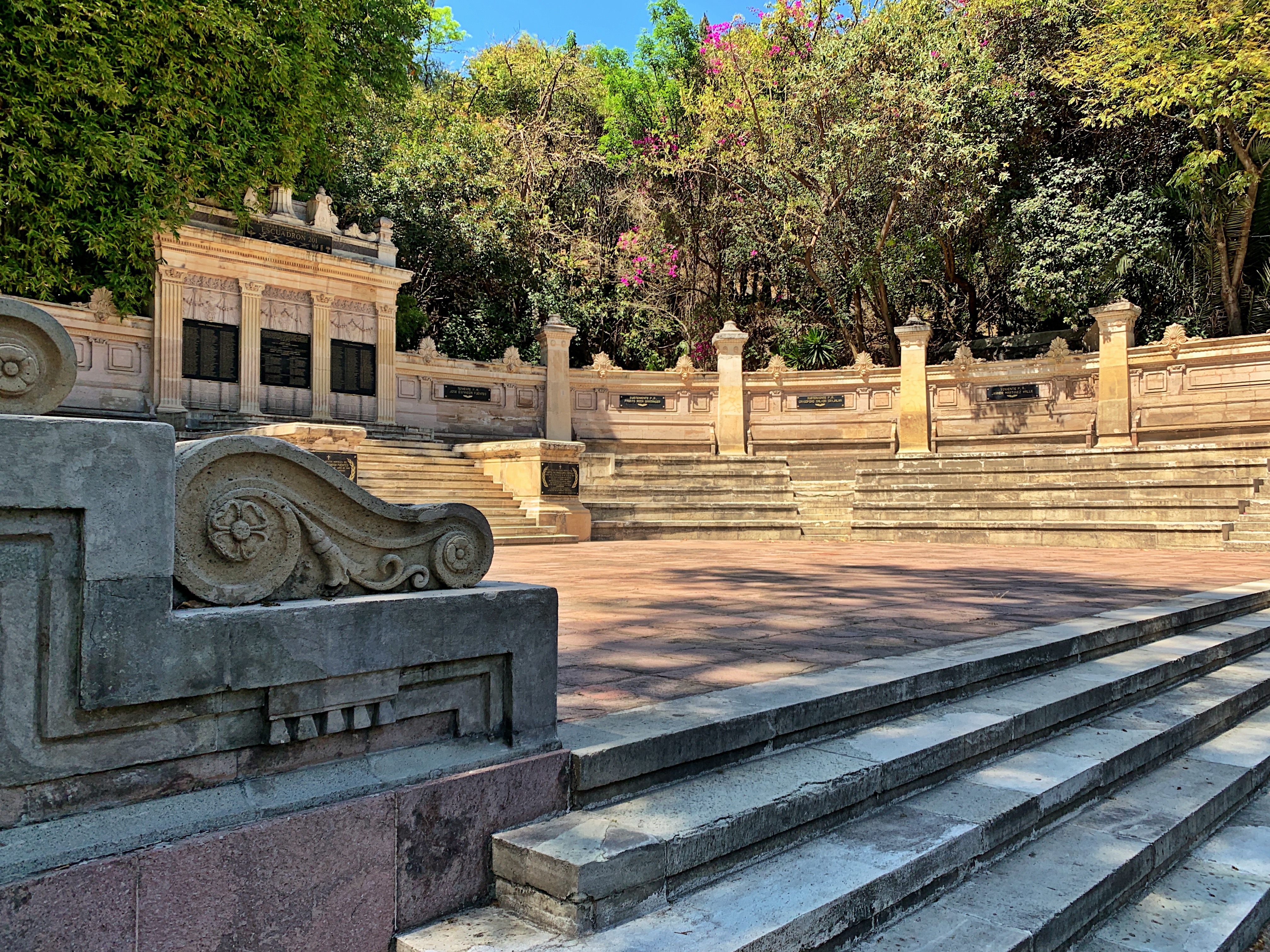
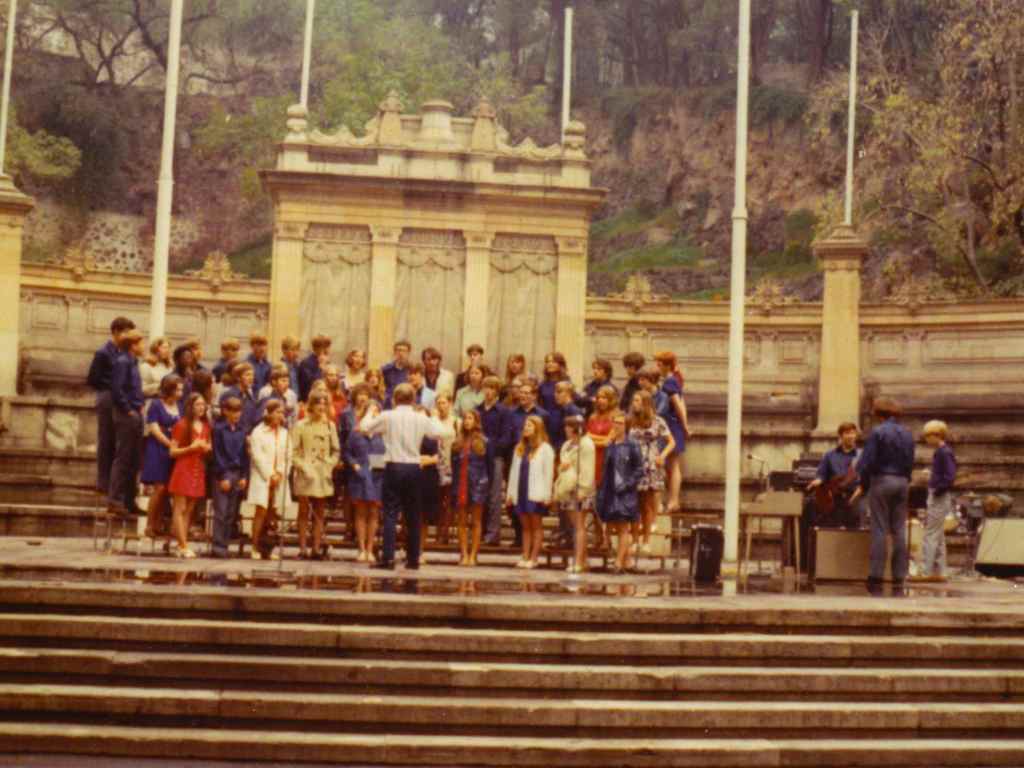
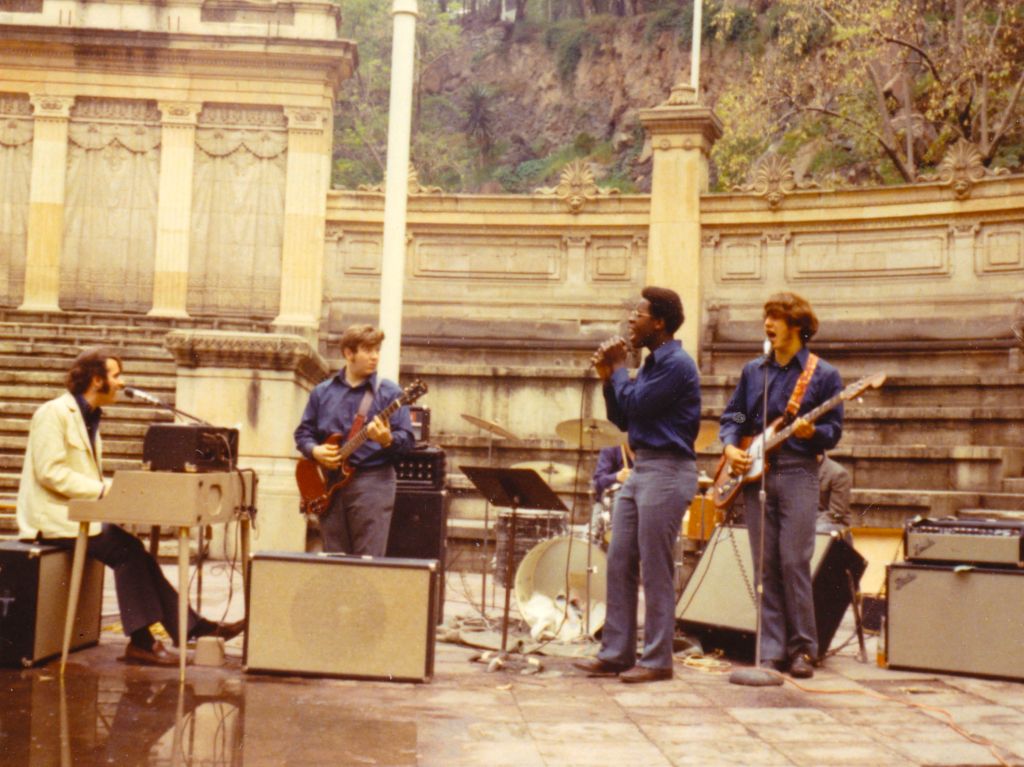
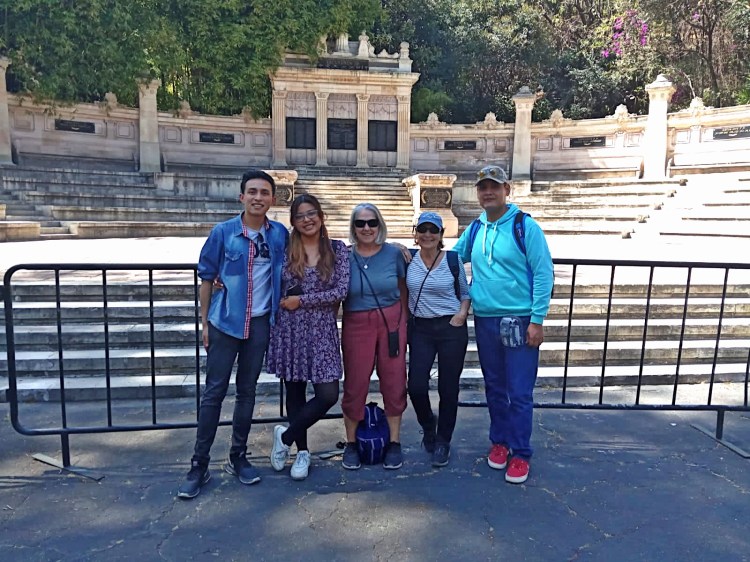
The monument to honor Squadron 201: a Mexican fighter group, who called themselves “Aztec Indians” helped liberate the Philippine island of Luzon in the summer of 1945. In 1971 my high school played a concert in this same location. It was great to see it again!
It was a long day with lots of walking. We were disappointed not to be able to go the Chapultepec Castle – it is one of my favorites! Instead we walked around and around the park and ended at the Museum. Robin and I were so tired we sat in the beautiful courtyard. I didn’t even take any photos!
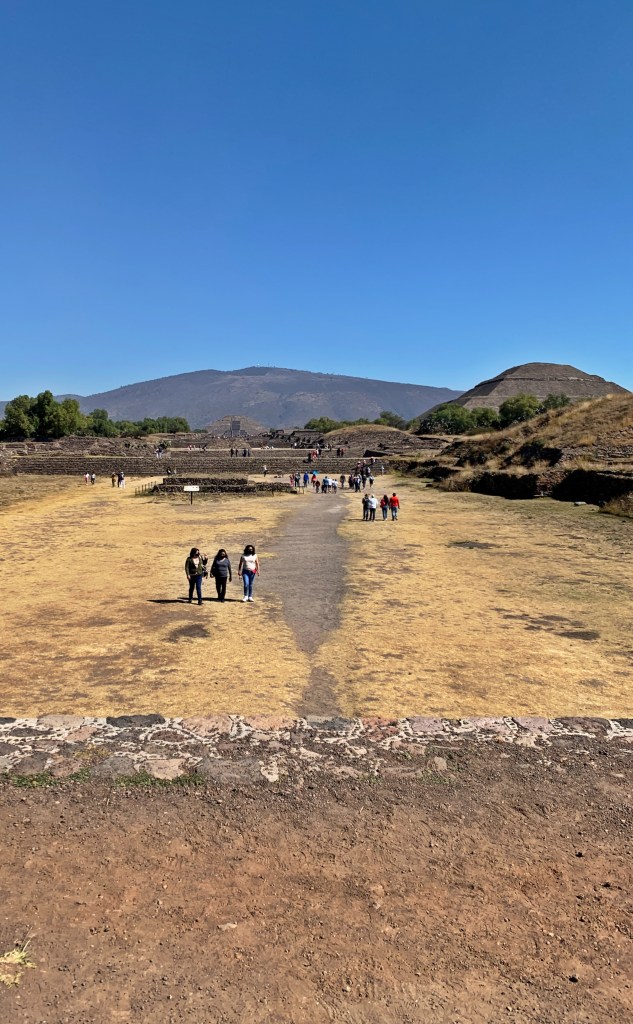
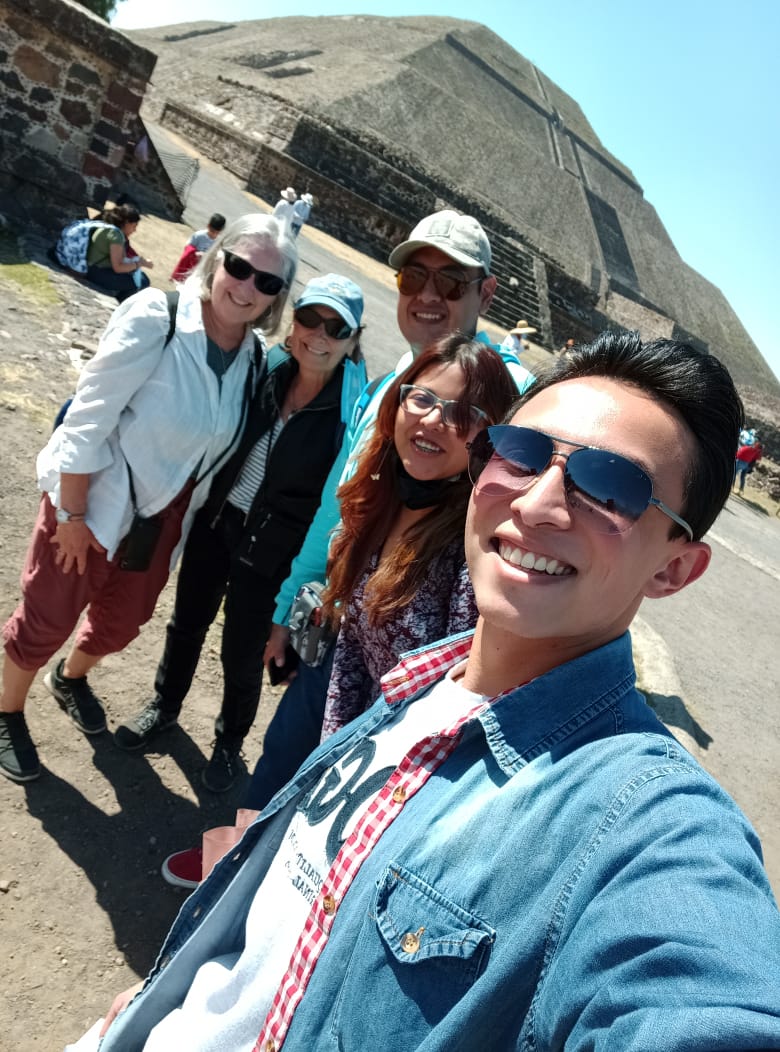
the Pyramid of the Sun
Graduation at Corazon de Brazil
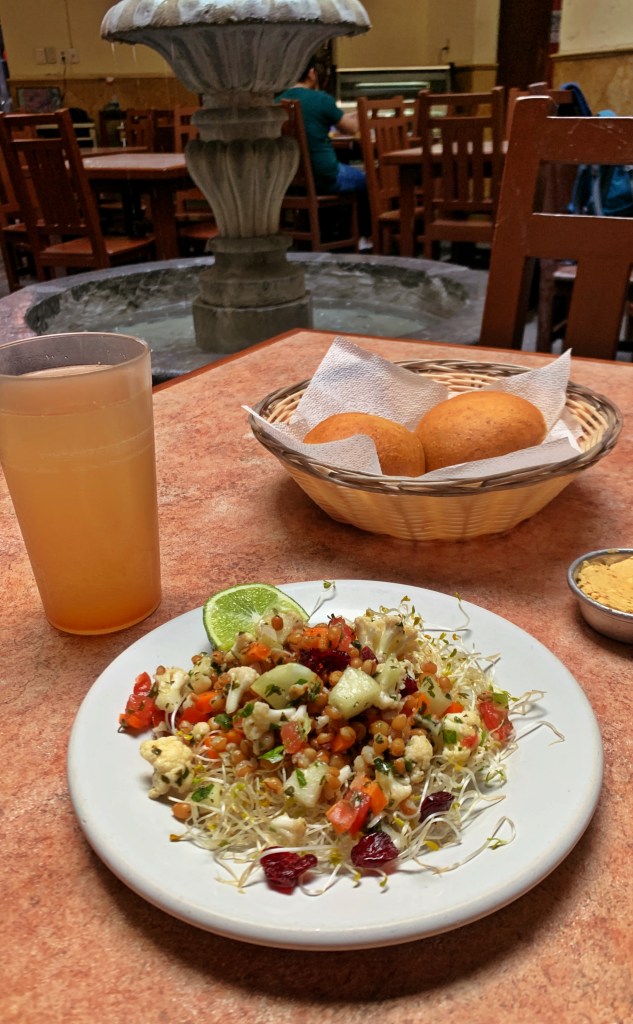
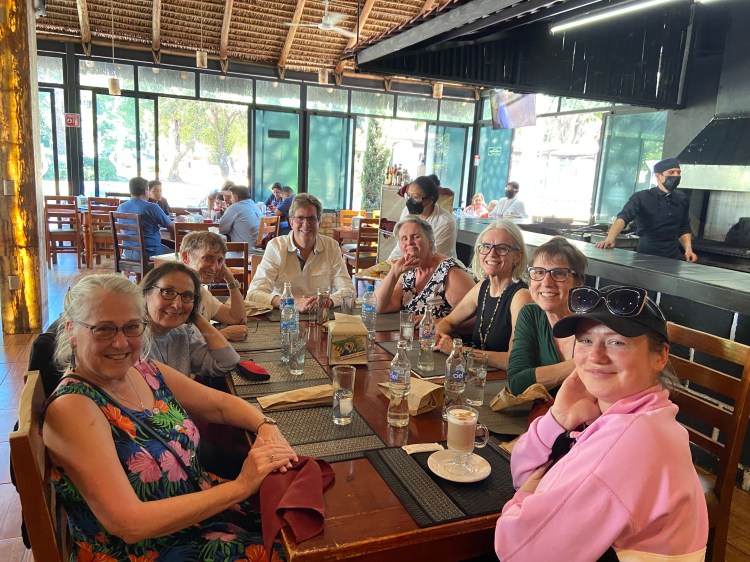
At the end of my six weeks I gathered with other “grads” at a hosted meal at a wonderful Brazilian restaurant. It is quite the spread with an amazing salad bar. The unusual thing is the protein! A series of many different cuts of beef, pig, lamb, and seafood are paraded around the table and you get to say “yes” to which one you want. I knew what was coming, so I only half-loaded my salad plate to take advantage of as many of the traveling protein and I could fit into my stomach. What a treat! In addition, the director of the Institute, Antonio, handed out certificates and personalized gifts!
 My México Travels
How wonderful Kathleen. Thank you for taking us along. Stay healthy!Terri
LikeLiked by 1 person
What a great adventure! I love reading and looking at the wonderful pictures ! Thank you for taking us along on the great adventure of learning!
LikeLiked by 1 person
Looks incredible – Cholula is probably my favourite place in the world. sounds like a great way to learn spanish!
LikeLiked by 1 person